




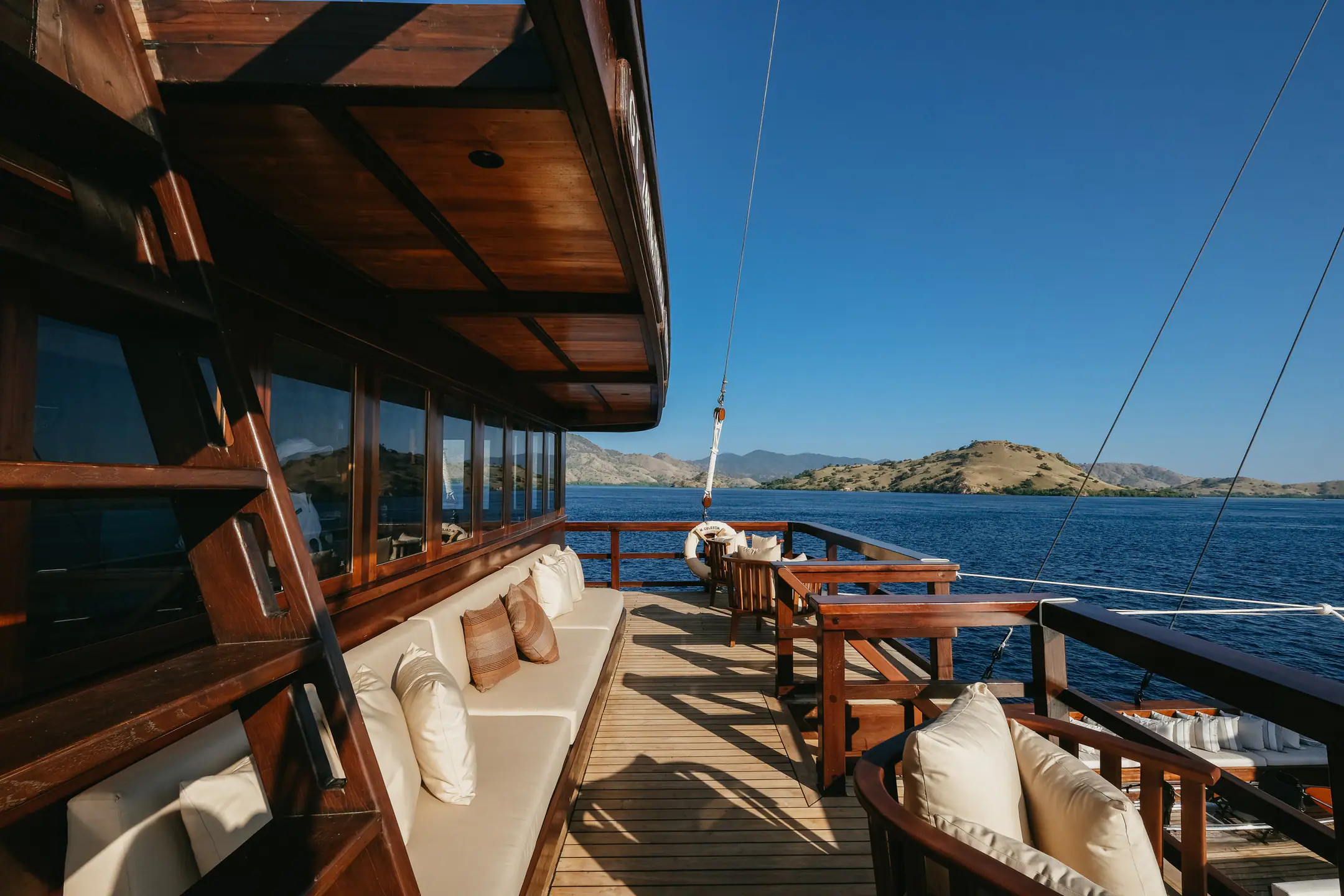
The boat slows before the island comes fully into view. Komodo rises from the sea in muted tones: ochre hills rolling like ancient backs, dry and unadorned, shaped by wind and patience rather than human ambition. Above the waterline, the island is austere. The land resists softness. Vegetation is sparse, the palette restrained—sun-bleached grasses, volcanic earth, shadows that stretch longer than expected. This landscape does not invite comfort.
Komodo Island does not exist in isolation. It belongs to Indonesia—an archipelago of more than seventeen thousand islands, bound together by rhythm and defined by movement: of tides, of trade winds, of cultures layered over centuries of migration, ritual, and resilience. The archipelago is one of the world’s great meeting points—a place shaped by the collision of tectonic plates, the overlap of faunal realms, and centuries of exchange between the cultures of Oceania and mainland Asia.
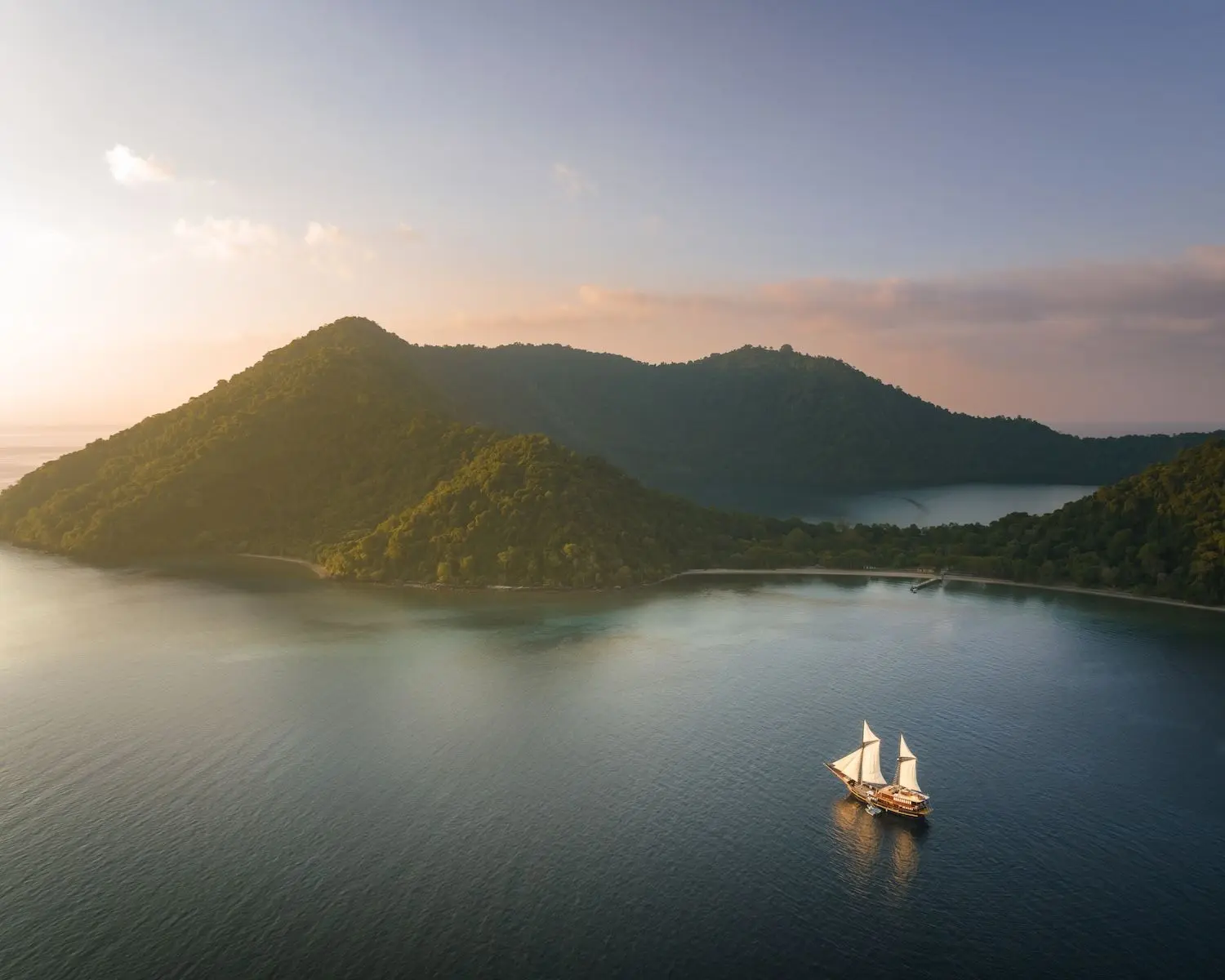
Komodo sits at the far eastern edge of this vast mosaic, within the Lesser Sunda Islands, closer in spirit to elemental forces than to urban narratives. It feels removed from Indonesia’s better-known faces—not because it is disconnected, but because it represents a different truth of the country—one less shaped by people, and more by geology, isolation, and survival.
To stand on Komodo Island is to witness Indonesia in one of its most unfiltered forms—not as destination branding, but as a reminder of what the country has always held at its core: diversity without hierarchy, power without apology, and landscapes that do not need translation. Here, the first understanding comes quietly: humans are not hosts, they are visitors. Human presence adapts, or it does not remain.
The Dragons
And then there are the dragons. Komodo dragons (Varanus komodoensis) are often described as relics, survivors of another age. But relics belong to museums. These creatures belong precisely where they are—unapologetic proof that nature does not constantly evolve toward gentleness.
A top predator in its ecosystem, the Komodo dragon is the largest living lizard on Earth—its scale alone enough to unsettle any lingering sense of dominance. Muscular and deliberate, it moves with the assurance of a creature that has never needed to negotiate its place in the world.
They do not announce themselves. There is no dramatic reveal, no roar engineered for awe. A Komodo dragon lies still in the shade, its body heavy against the earth, eyes half-lidded in a way that feels less like rest and more like calculation. It does not move for us. It does not need to. This is not wildlife as spectacle. This is presence.
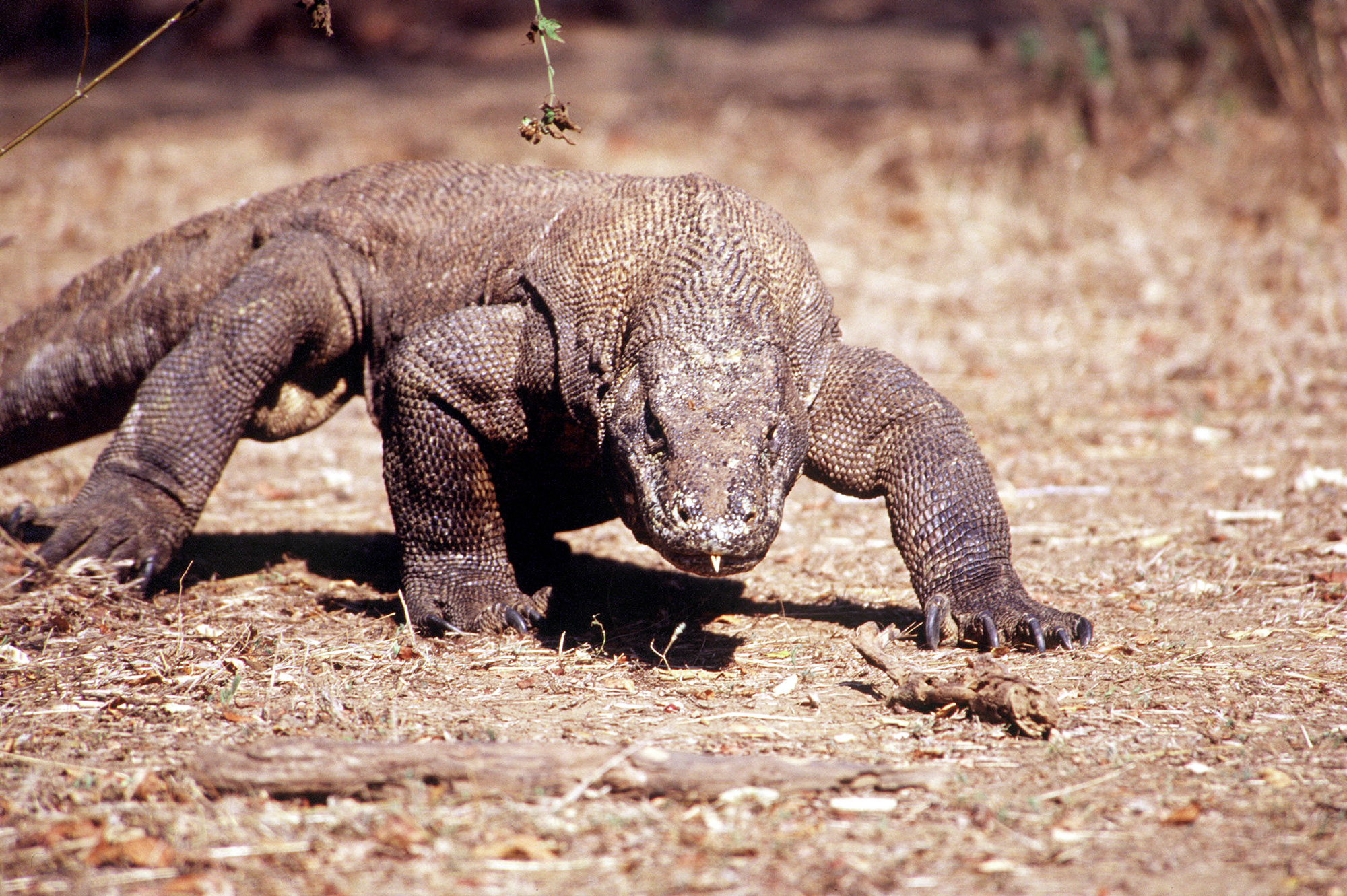
The dragon’s power is not theatrical—it is ancient, economical, unquestioning. Every movement, when it comes, is deliberate. Every stillness is earned. To stand near one is to feel time compress, as though the modern world has briefly lost relevance. Cameras lower. Voices soften. Instinct replaces commentary.
Protection and Responsibility
Komodo Island does not need to be conquered. It needs to be protected—from erosion, from overexposure, from our tendency to mistake access for entitlement. The island exists within carefully enforced boundaries. Guided walks. Limited numbers. Clear rules that prioritise distance over intimacy. These are not inconveniences; they are acts of respect. The dragons are not here for encounters. The reefs are not here for consumption. The silence is not here to be filled.
To experience Komodo consciously is to accept limitation—to understand that not every place should bend to human desire. Conservation here is not abstract. It is visible, practised, and necessary. Without restraint, the very wildness that defines the island would disappear under the weight of admiration. Komodo teaches this lesson without explanation. It simply holds its ground.
Closing Thoughts
Leaving the island, there is no rush of exhilaration, no checklist satisfaction. What lingers instead is a quieter feeling—something closer to humility. Komodo does not offer the transformation modern travel narratives promise. It offers perspective. It reminds us that the world is not built around our comfort, our pace, or our presence. Some places remain powerful precisely because they never learned to yield.
As the boat pulls away and the hills recede into the haze, the island returns to itself. The dragons settle back into stillness. The sea continues its private choreography below. And for a moment, we carry with us the rare understanding of what it feels like to witness nature unchecked—not as spectacle, but as truth.







Leave a Reply