




Peaceful. Wild. Untouched.
Scattered like emerald punctuation marks across the mid-Atlantic, between Europe and North America, the Portuguese archipelago of the Azores feels like a hidden paradise still waiting to be discovered.
Because of their isolation—more than 1,500 kilometers from mainland Portugal—the islands evolved differently from the rest of Europe. Landscapes remain raw. Tourism remains measured. And daily life still follows the rhythms of weather, sea, and soil.
What makes the archipelago so special is not one landmark or one viewpoint. It is the atmosphere of the place itself. Here, volcanoes shaped the islands. The Atlantic softened them. Hydrangeas framed them. Crater lakes glow in improbable shades of green and blue. Lush vegetation surrounds steaming hot springs. The rhythm of nature quietly resets your own—pure magic.
It is this balance between drama and gentleness that defines the Azores. One moment you are hiking along a crater rim. The next, you are soaking in a thermal pool surrounded by forest mist.
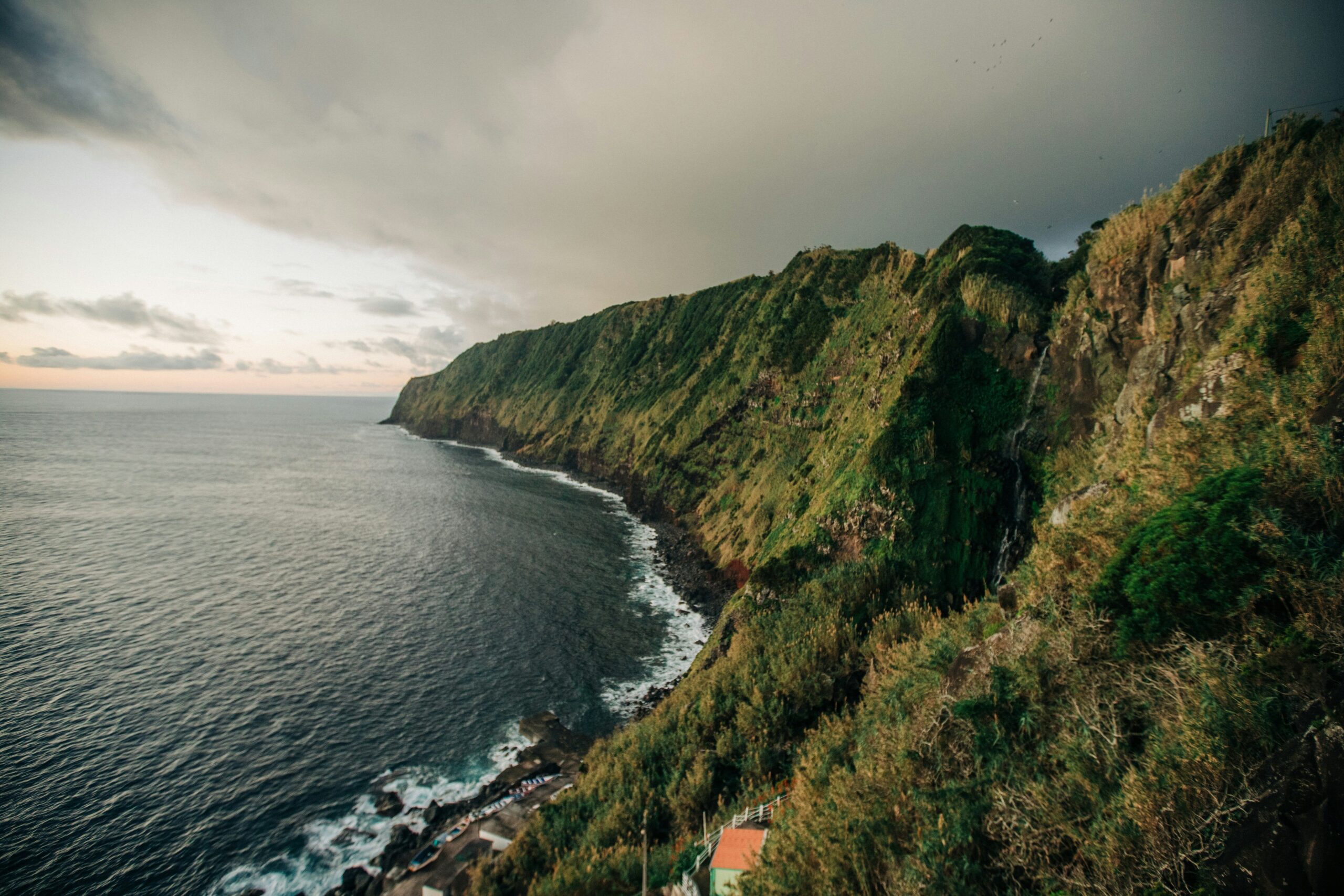
Adventure here does not feel extreme. It feels natural. Here, nature is not decorative. It is dominant. Roads curve around volcanic ridges instead of through them. Clouds drift low enough to touch. The Atlantic is not a backdrop but a presence. The Azores are not about sightseeing. They are about discovery and experience.
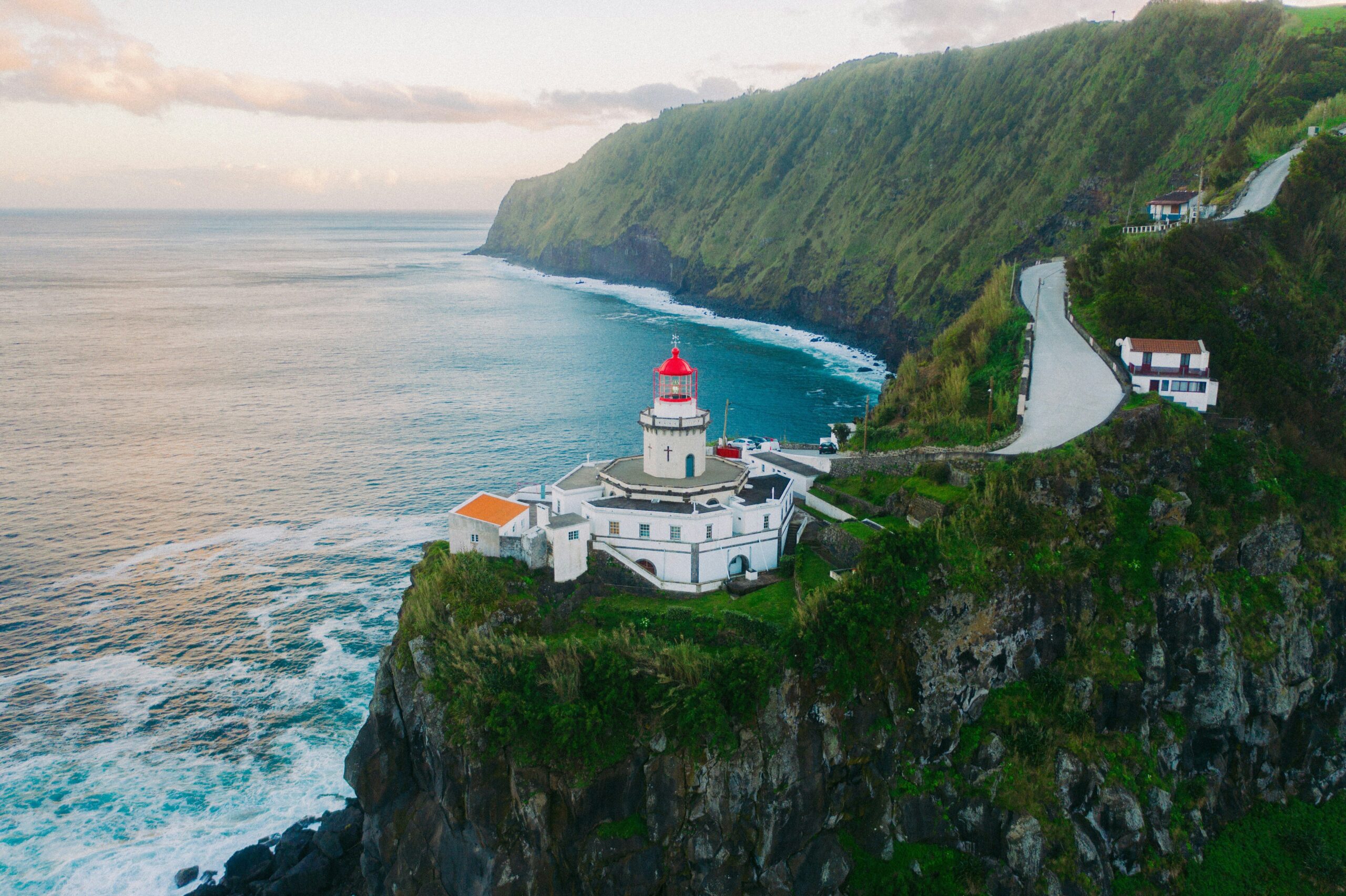
São Miguel, the living heart of the Azores
And if there is one island that captures the essence of the Azores from the very beginning, it is São Miguel.
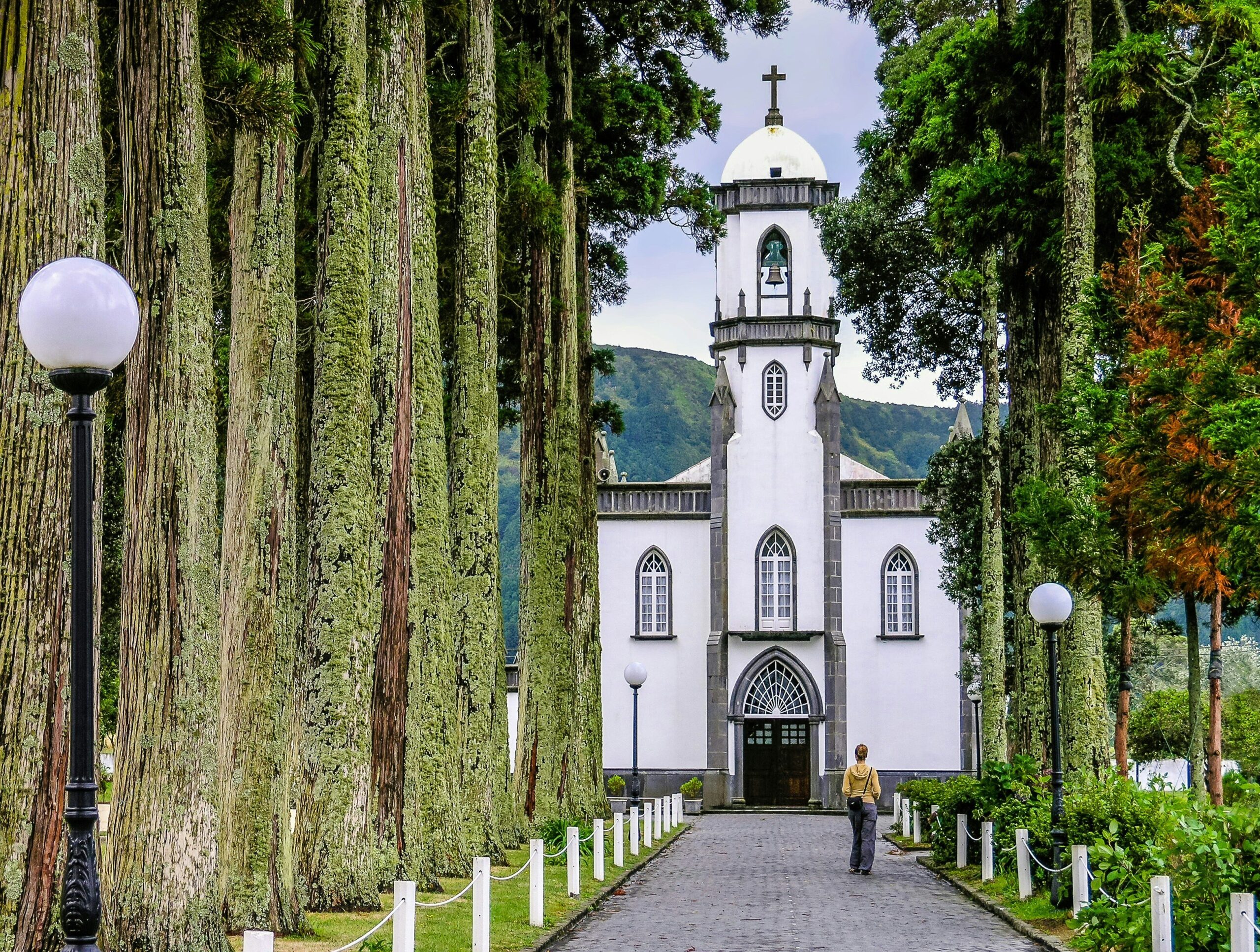
Often called the “Green Island,” São Miguel feels like a quiet introduction to the archipelago’s character—lush, volcanic, and unexpectedly alive. Here, the landscape does not simply surround you; it accompanies you. Roads wind through dense cedar forests, crater lakes appear where you least expect them, and steam rises gently from the earth in places where the island still reminds you of its origins.
Nowhere is this more evident than in the Furnas Valley, where geothermal energy shapes daily life in ways that feel both ancient and remarkably present. Locals still cook traditional cozido underground using volcanic heat, lowering heavy pots into the soil and returning hours later to retrieve a meal prepared entirely by the island itself.
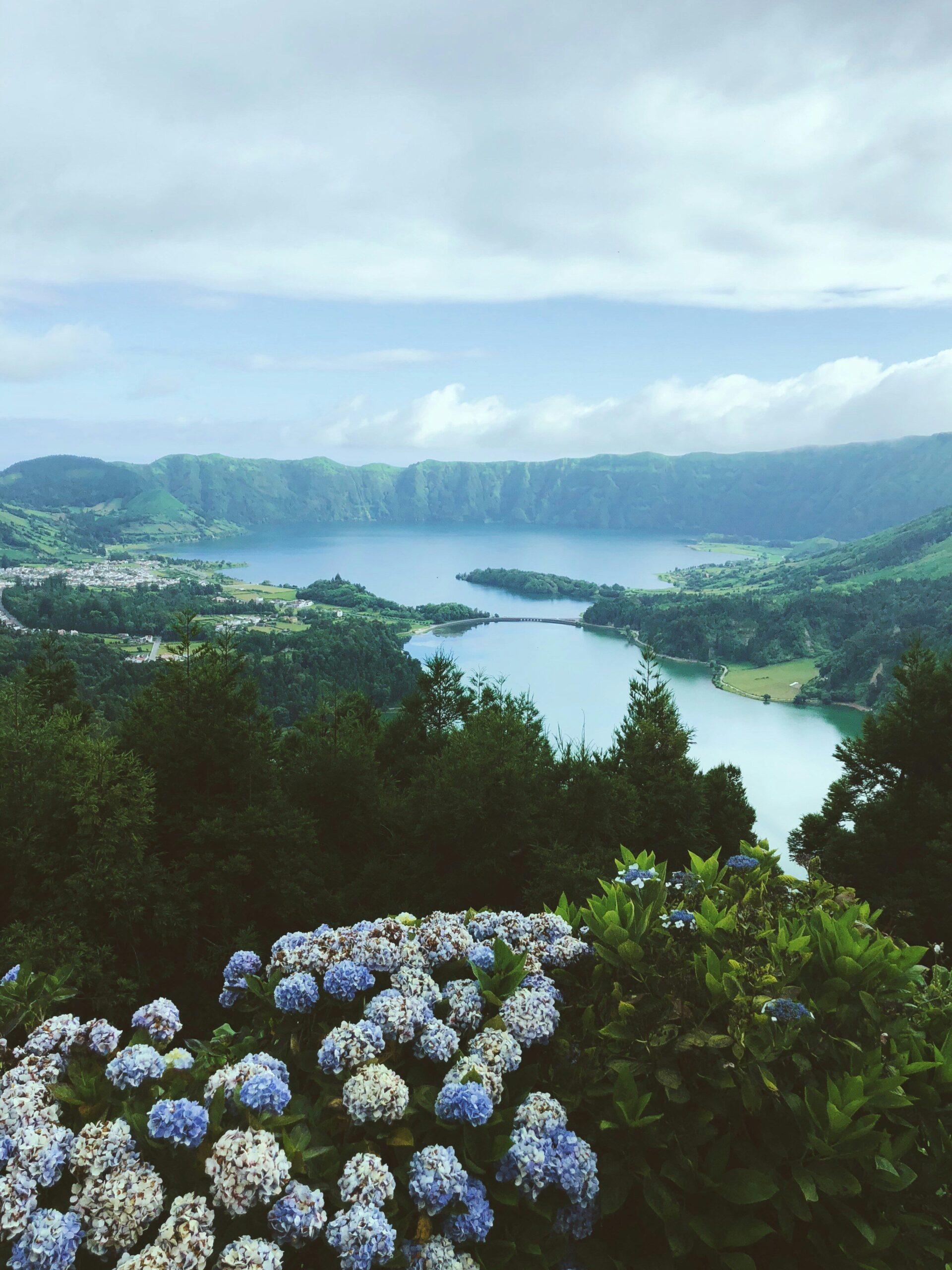
Further west, the vast caldera of Sete Cidades reveals one of the Azores’ most iconic landscapes. Standing at its rim and looking down at the twin lakes—one emerald, one sapphire—you begin to understand that the beauty of the Azores is not dramatic in the conventional sense.
It is immersive.
And once you begin to explore São Miguel, it becomes clear that this is not simply where most journeys start. It is where the islands begin to reveal themselves.
Sete Cidades,
Further west, the landscape opens dramatically at Sete Cidades, one of the most remarkable volcanic calderas in the Atlantic. Standing at the rim, the view unfolds slowly rather than all at once. Below, two lakes rest quietly inside the crater—one emerald green, the other deep sapphire blue—separated by a narrow bridge that seems almost too delicate for the scale of the landscape around it.
Clouds drift across the basin. Hydrangeas line the crater roads in soft blue corridors. And the silence feels expansive rather than empty. It is here that many travelers first understand what makes the Azores different from elsewhere in Europe. This is not scenery designed to impress. It is a landscape that invites you to stay. Walking along the caldera rim or cycling through the valley below, the experience feels less like visiting a viewpoint and more like stepping inside a living volcanic world shaped by time, weather, and quiet resilience.
Sete Cidades does not simply mark a highlight of São Miguel. It sets the tone for the entire archipelago.
Furnas Valley
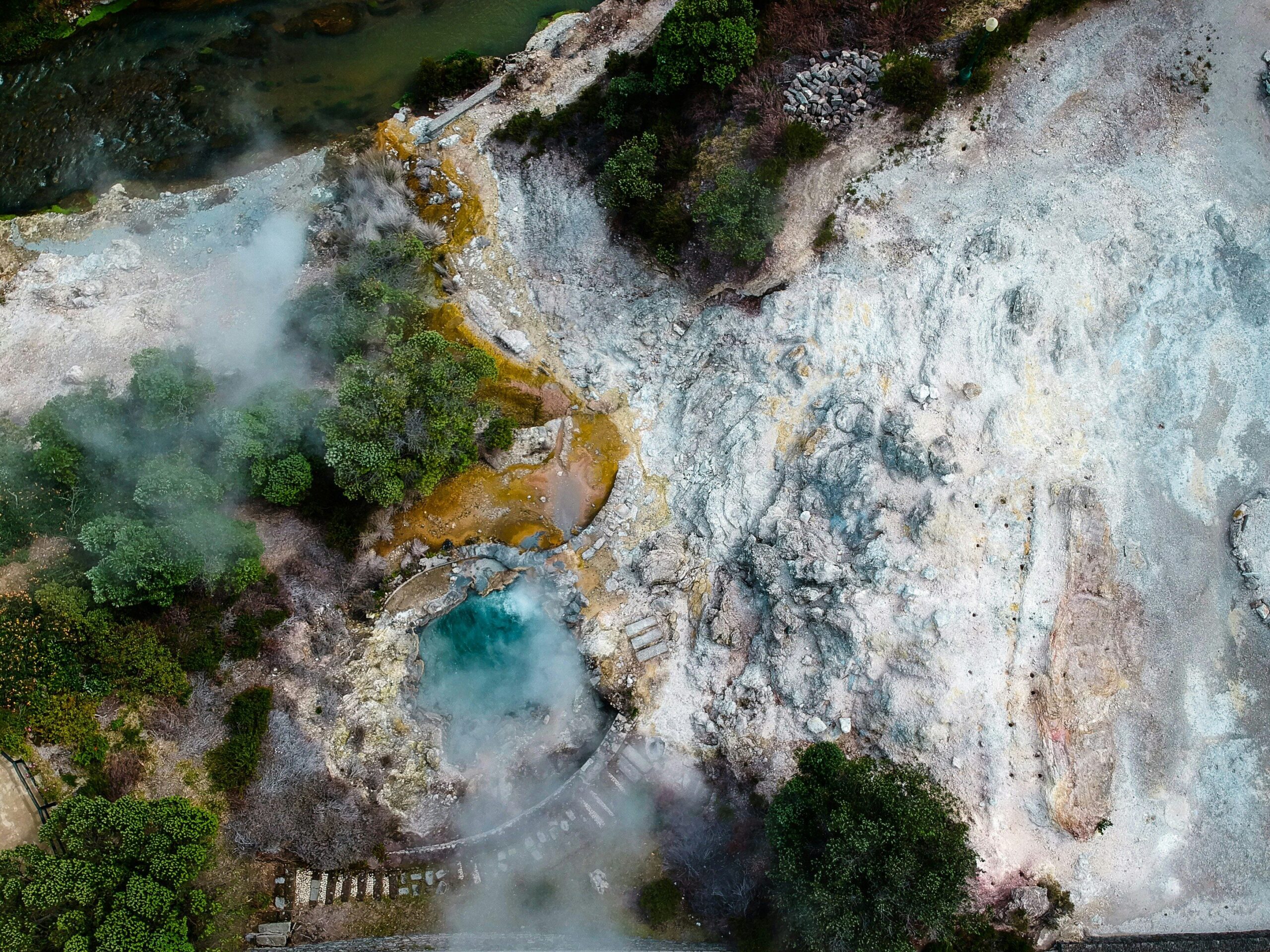
On the eastern side of São Miguel, the landscape changes again. In Furnas Valley, the island reminds you that it is still very much alive beneath your feet.
Steam rises quietly from the earth along the shores of Lagoa das Furnas, drifting through trees and across narrow walking paths where the scent of minerals hangs in the air. Small wooden signs mark the places where locals lower heavy pots into the volcanic soil each morning, returning hours later to retrieve cozido das Furnas—a traditional stew slow-cooked entirely by geothermal heat.
Few meals in Europe feel so directly connected to the land that produced them. Nearby, thermal pools glow amber beneath dense subtropical vegetation. Soaking here, surrounded by mist and silence, feels less like visiting a spa and more like stepping into the island’s natural rhythm. Furnas is not dramatic in the way crater lakes are dramatic. It is intimate.
It is warm earth, moving water, and the quiet sensation that nature is still shaping the landscape in real time. And it is here that many travelers begin to slow down—not because they planned to, but because the island gently insists on it.
The tea plantations of São Miguel
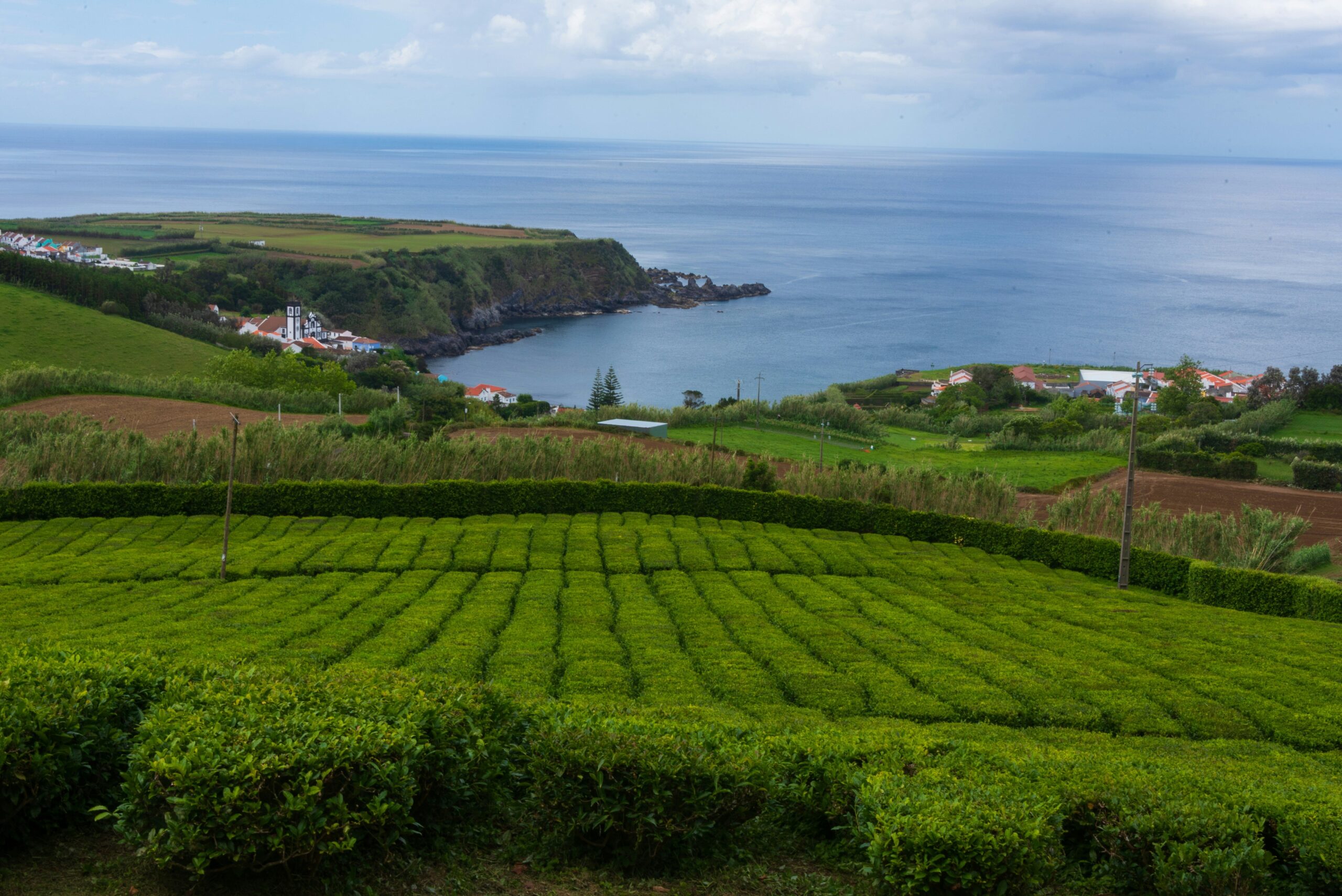
Further north along São Miguel’s coastline, another unexpected landscape appears—one that few travelers associate with Europe at all. On gently rolling hills overlooking the Atlantic, the tea plantations of Gorreana stretch across the island in carefully patterned green lines shaped by wind, mist, and time. Established in the 19th century, they remain the oldest—and today the only—commercial tea plantations in Europe.
Walking through the fields feels quietly meditative. Narrow paths wind between rows of bright green leaves while the ocean remains just beyond the horizon, close enough to be sensed even when it disappears behind the hills.
Inside the small factory nearby, production continues much as it has for generations. Black and green teas are still processed using traditional methods, creating a rare example of agriculture that feels both historic and alive. It is another reminder that the Azores are full of landscapes you do not expect to find here. And that discovery is part of their magic.
Pico, Portugal’s wild vertical island
If São Miguel introduces the Azores gently, Pico changes the pace entirely.
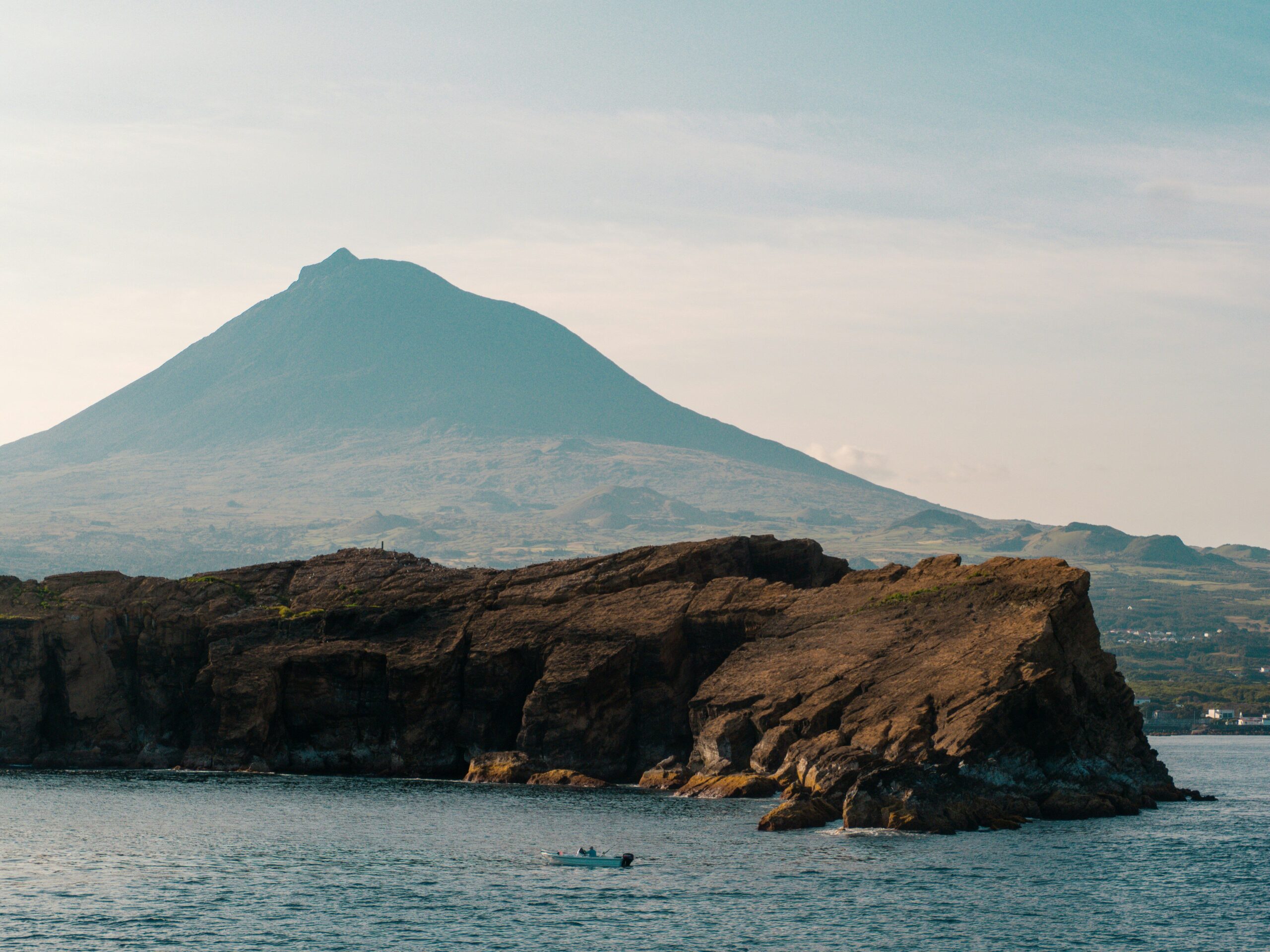
Rising sharply from the Atlantic, Portugal’s highest mountain defines the island long before you arrive. Mount Pico is visible from neighboring islands on clear days, its dark volcanic silhouette standing above the horizon like a quiet landmark for travelers crossing between continents. Climbing Pico is one of the most memorable adventures in Atlantic Europe.
The ascent begins across black lava fields shaped by past eruptions and gradually rises through shifting cloud layers toward a summit that feels suspended between ocean and sky. From above, the surrounding islands appear as distant green fragments scattered across the Atlantic. Reaching the top is not simply about elevation. It is about perspective.
Few places in Europe allow you to feel so clearly how small the islands are—and how vast the ocean around them remains. Yet Pico’s story is not only written in its mountain. At lower elevations, another landscape reveals itself just as remarkable and entirely unexpected.
Across fields of hardened lava, centuries-old stone walls form thousands of small vineyard enclosures designed to protect fragile vines from wind and salt spray. This UNESCO-listed wine landscape is unlike anything else in Europe—an extraordinary example of how island communities adapted to one of the most demanding environments imaginable. Walking through these volcanic vineyards, with Mount Pico rising behind you and the Atlantic always nearby, you begin to understand something essential about life in the Azores:
Here, nature is never resisted. It is negotiated with. And that relationship shapes everything.
Faial, where sailors leave their mark
Just across the narrow channel from Pico lies Faial, an island shaped as much by travelers as by volcanoes.
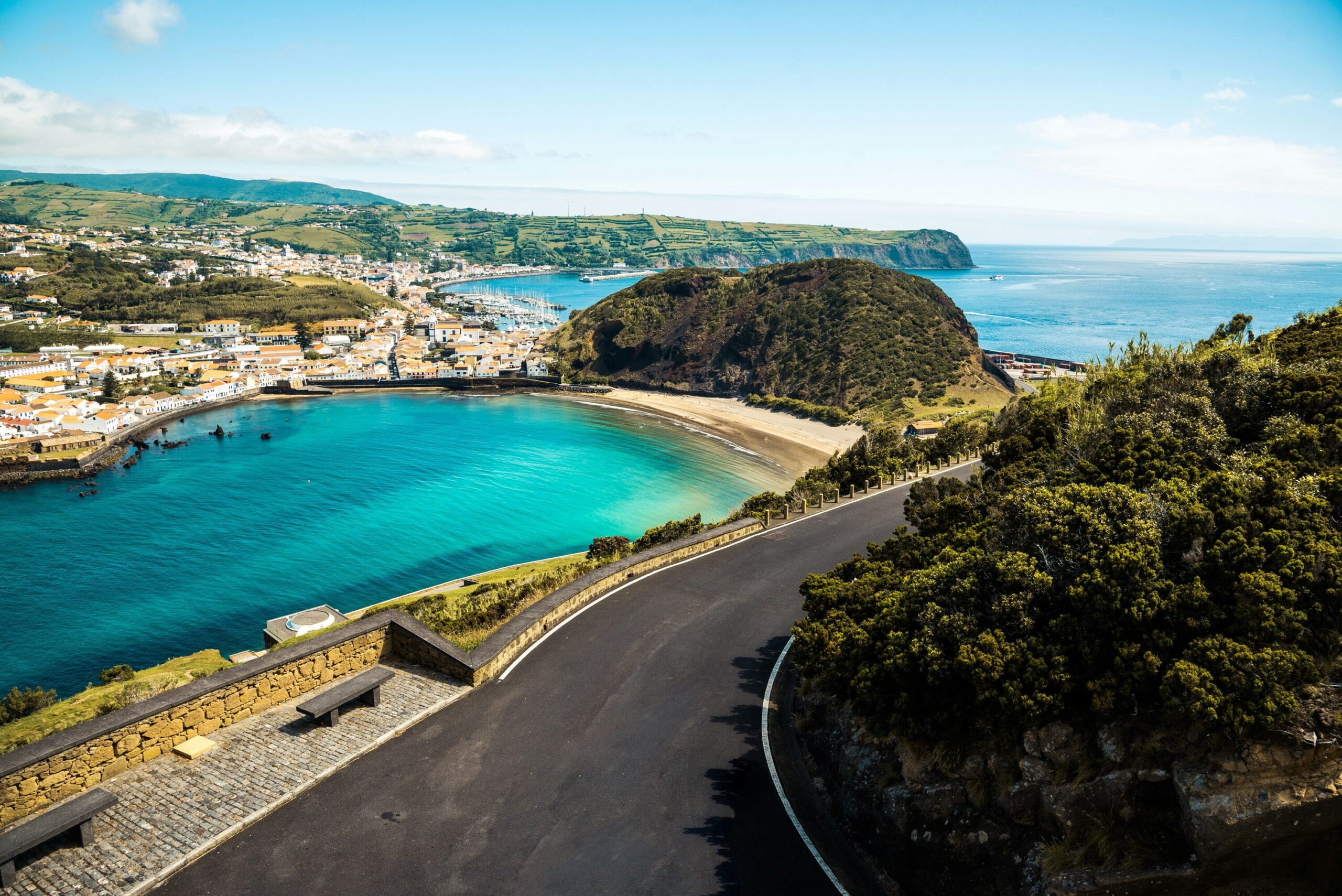
For generations, sailors crossing the Atlantic have stopped here before continuing toward Europe or the Americas. In Horta Marina, this tradition lives on in one of the Azores’ most quietly remarkable customs. Crews paint their names, symbols, and flags along the harbor walls before departing again—a ritual believed to bring good luck for the journey ahead.
Walking along these painted surfaces feels like reading an open-air archive of ocean crossings. Each signature marks a moment of arrival, departure, or safe passage somewhere between continents. It is a reminder that the Azores have always been more than remote islands. They are a meeting point in the Atlantic. Not far from the marina, the island tells a very different story—one written by the earth itself.
At Capelinhos, a powerful volcanic eruption in the late 1950s dramatically reshaped Faial’s western coastline, burying homes, extending the island’s shoreline, and creating a landscape that still feels newly formed today. Walking across its ash-colored terrain, past the half-buried lighthouse that now stands as a monument to the eruption, feels less like visiting a viewpoint and more like stepping into a living geological memory.
Few places in Europe make the forces that shaped the continent feel so immediate. Faial is not only a stop between islands. It is a place where the Atlantic’s history—human and volcanic—becomes visible at the same time.
Flores, the edge of Europe
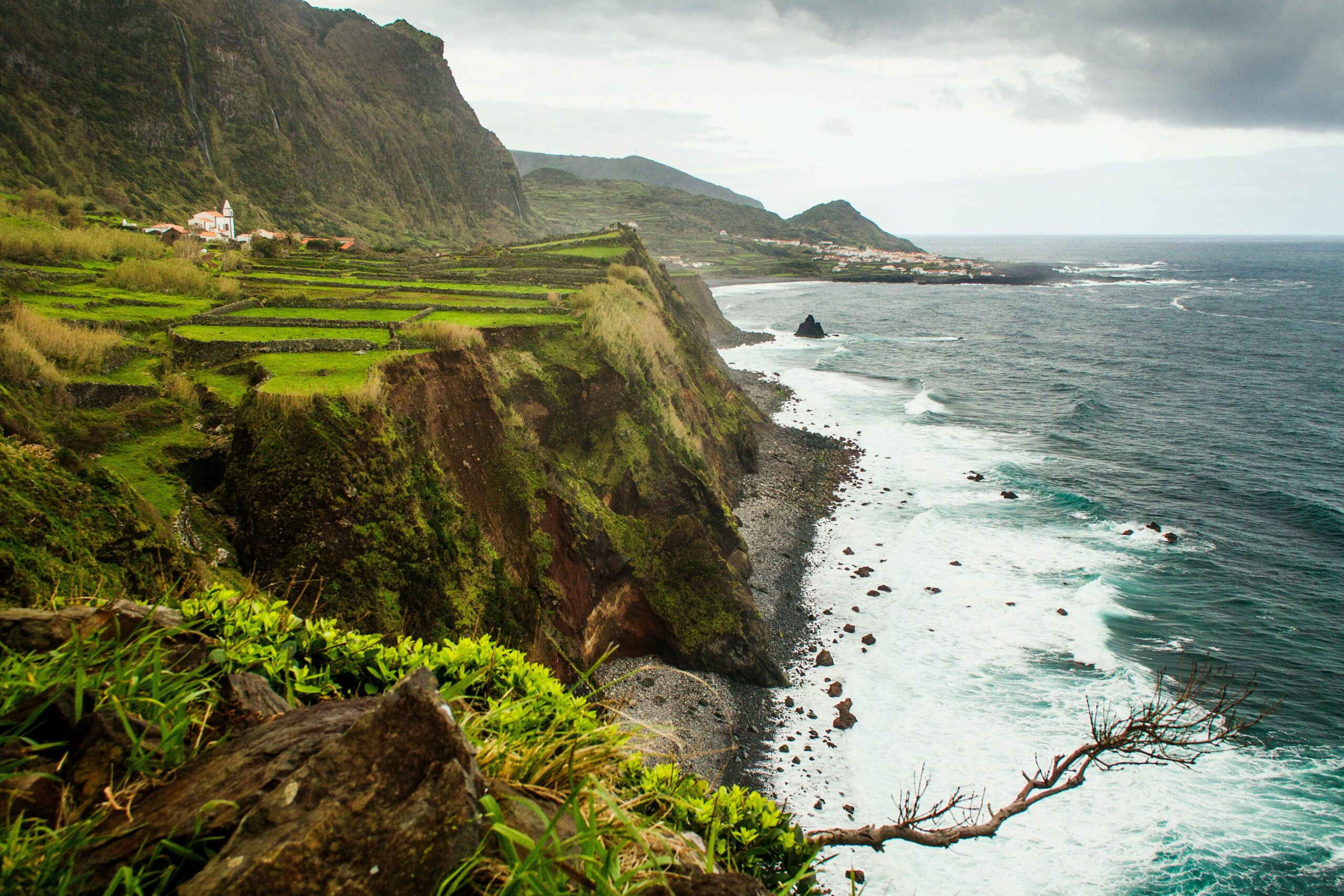
At the western edge of the archipelago, Flores feels like the last green outpost before the Atlantic opens fully toward North America. Reaching the island already feels like an arrival somewhere different. Distances grow wider. Roads become quieter. And nature begins to feel less like scenery and more like a companion.
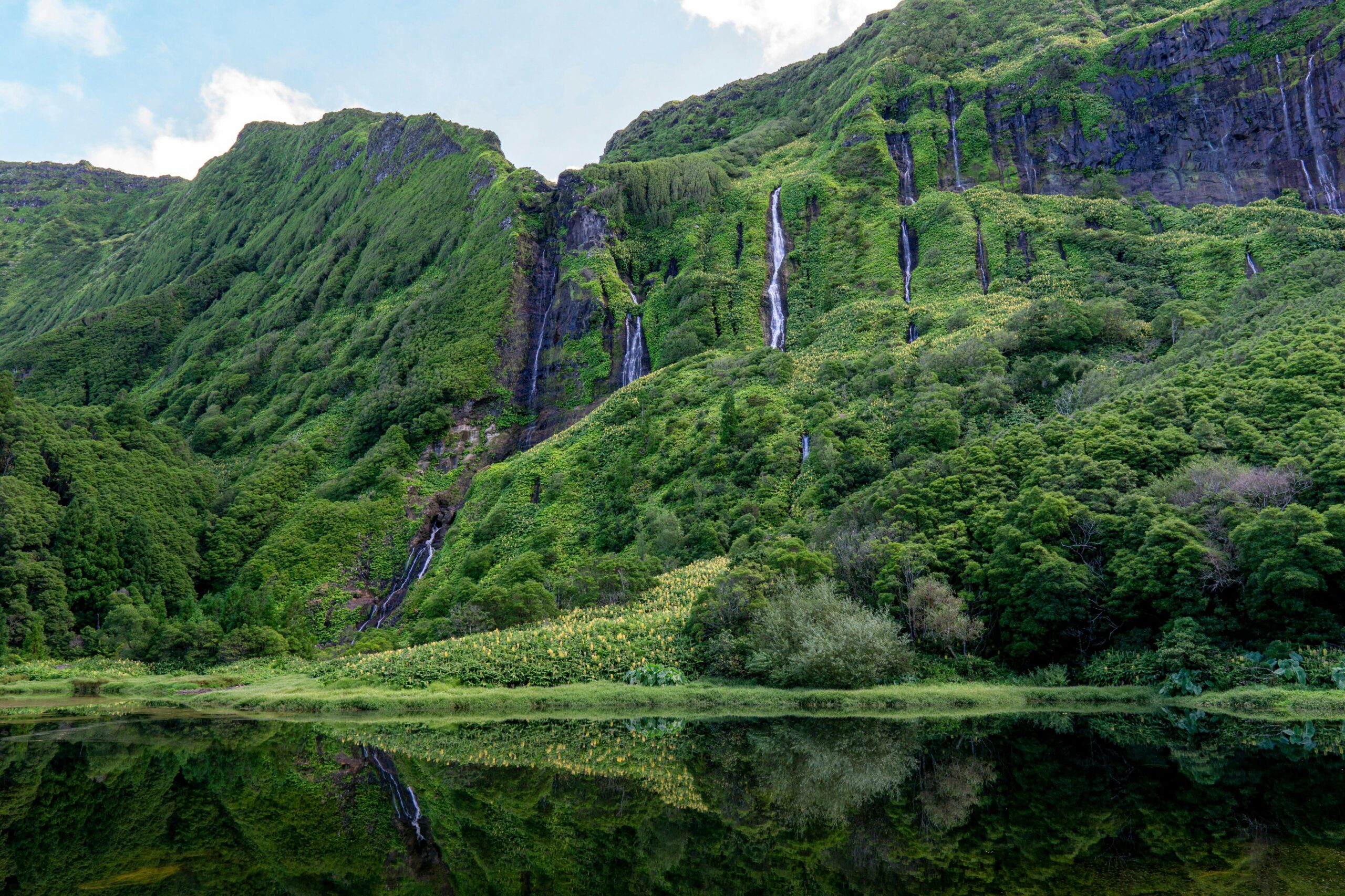
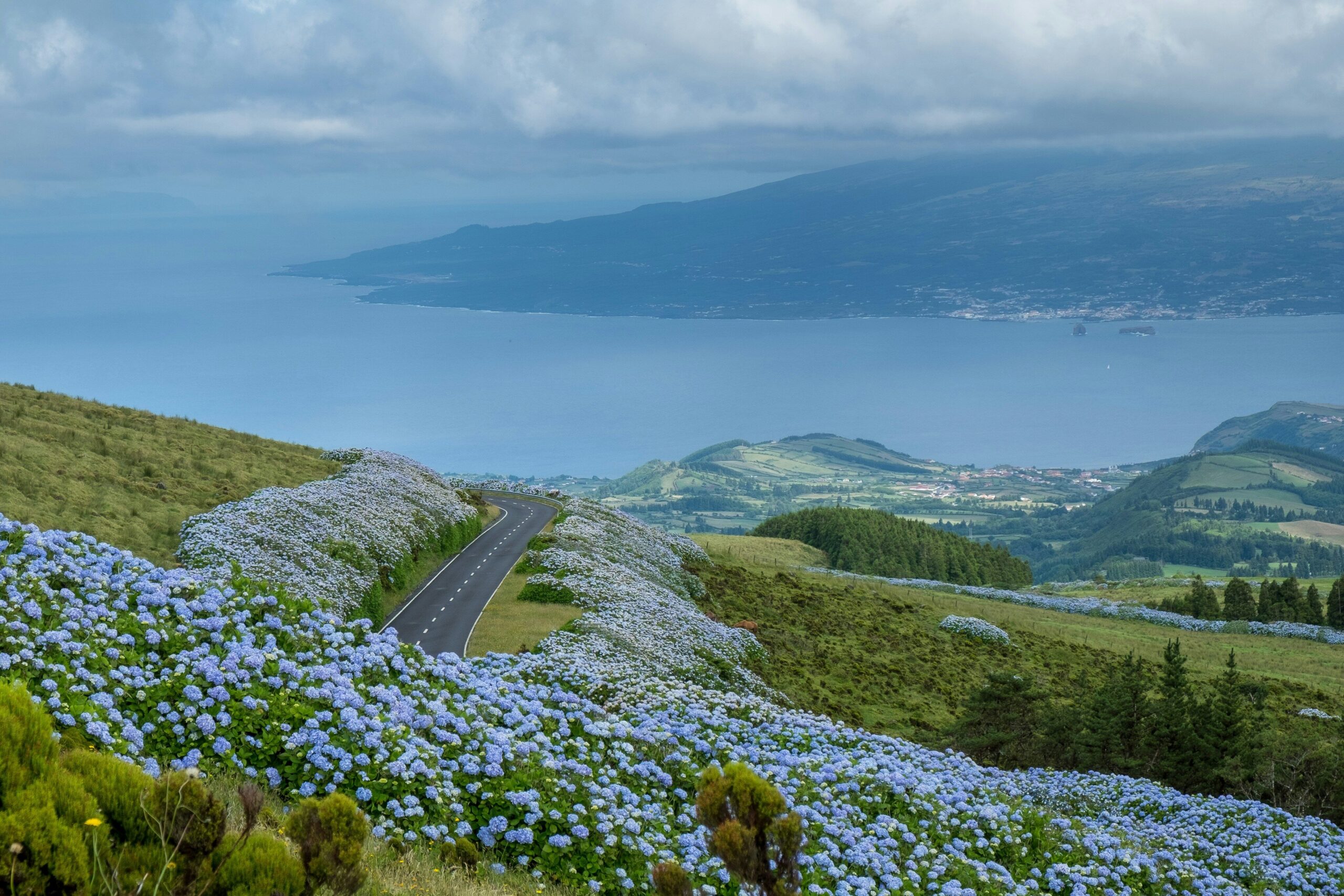
Here, waterfalls ribbon down moss-covered cliffs into deep volcanic basins. Crater lakes sit undisturbed in the island’s interior. Hydrangeas line narrow country roads in long blue corridors that seem to lead nowhere in particular—and everywhere at once.
Flores moves at its own pace. Standing on its western shoreline, you are closer to Canada than to mainland Portugal. Yet the feeling is not one of remoteness. It is one of presence.
There is very little here designed for spectacle. No grand promenades. No crowded viewpoints. Only wind moving across pastures, mist drifting through valleys, and the steady rhythm of the Atlantic shaping the coastline below. And perhaps that is what makes Flores so memorable. It captures the essence of the Azores in its purest form: a landscape where nature still leads the conversation—and where travelers are invited simply to follow.
In a Europe where so many destinations feel already discovered, already photographed, already explained, the Azores remain unedited.
They are not defined by monuments or cities, but by the brush of nature—clouds drifting across crater lakes, mist rising from thermal springs, whales passing along deep Atlantic migration routes, and paths that lead through landscapes still shaped by volcanic time. Travel here is not about collecting highlights. It is about collecting feelings.
Perhaps that is why the Azores stay with you long after you leave them—not as a checklist of places visited, but as a sense of space, of nature still unfolding at its own pace somewhere between continents. And standing at the edge of these islands, watching the Atlantic stretch endlessly toward the horizon, you arrive at a quiet epiphany:
God did not rest on the seventh day. He created the Azores.
Planning Your Journey to the Azores
Adventure in the Azores takes many forms. Some travelers climb Mount Pico, Portugal’s highest peak, rising dramatically above the Atlantic. Others explore the UNESCO-listed city of Angra do Heroísmo on Terceira, where maritime history still shapes the rhythm of daily life. And across Pico Island, vineyards protected by black volcanic stone walls tell a story of resilience that has defined life here for centuries. Equally remarkable is the way the Azores approach tourism itself.
Recognized internationally as one of Europe’s leading destinations for sustainable travel, the archipelago has chosen a different path—one shaped by preservation rather than expansion. Nature remains the defining experience here, not the backdrop to it.
The best time to visit is between June and August, when temperatures are at their warmest, skies are often clearer, and the islands’ famous hydrangeas line the roads in full bloom. But perhaps the Azores’ greatest luxury is that there is never only one right season to arrive. Each time of year reveals a different version of the islands.





Leave a Reply