




Travel, at its most honest, has never been about distance. It has been about departure — from familiarity, from certainty, from the comfortable illusion that we are the center of things. We crossed deserts to feel endurance. We crossed oceans to understand scale. We climbed mountains to look down and recalibrate our place in the world.
And now, at a moment when the Earth feels both endlessly connected and quietly exhausted, a new question drifts into focus: What if the most meaningful journey is not across the planet, but above it?
Space Travel Reimagined
In an era where space travel is often framed as a race — louder rockets, faster ascents, bigger headlines — Zephalto takes a radically different stance. There is no countdown charged with adrenaline, no violent rupture from Earth’s surface. Instead, there is a gentle ascent, carried by a stratospheric balloon, rising slowly and deliberately toward the thin veil that separates our world from the cosmos. This is not escape velocity. This is intentional elevation.
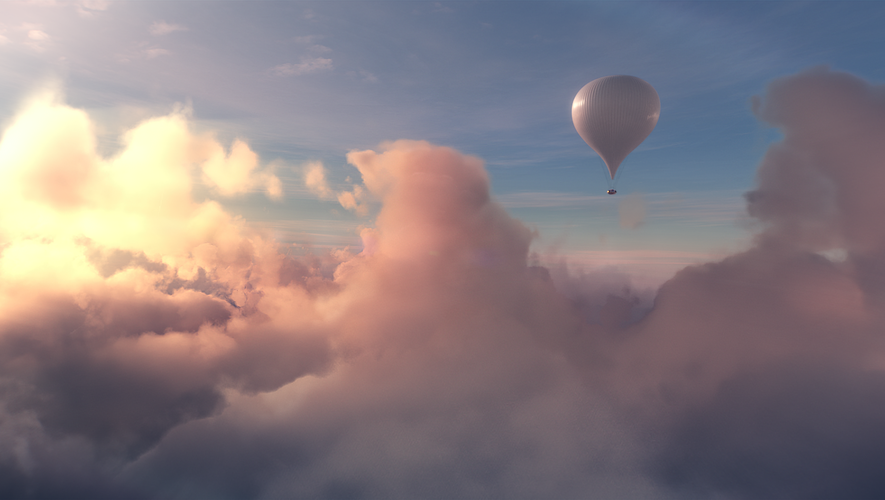
Zephalto’s vision resists the mythology of domination that has long surrounded space exploration. It does not seek to “conquer” space, nor to transform it into another arena of excess. Instead, it reframes space as a place for observation. In doing so, Zephalto positions itself not as a transportation company, but as a philosophical proposition: that the future of travel may lie in how we move, not how far.
The New Luxury is Perspective
Luxury travel has always reflected its time. There was an age of grand hotels and white-glove formality, an age of private jets and speed, an age of overexposure where exclusivity became performance. We are now entering something quieter.
Today’s rarest commodity is not access, but perspective. Not visibility, but stillness. Not acceleration, but pause. Zephalto speaks directly to this cultural shift. Its journey to the stratosphere offers no curated distraction, no digital noise, no performative glamour. What it offers instead is a recalibration of scale — the opportunity to see the Earth as a whole, fragile and luminous, floating without borders. From this altitude, luxury is no longer about being above others. It is about being above the narrative.

Floating between Earth and Infinity
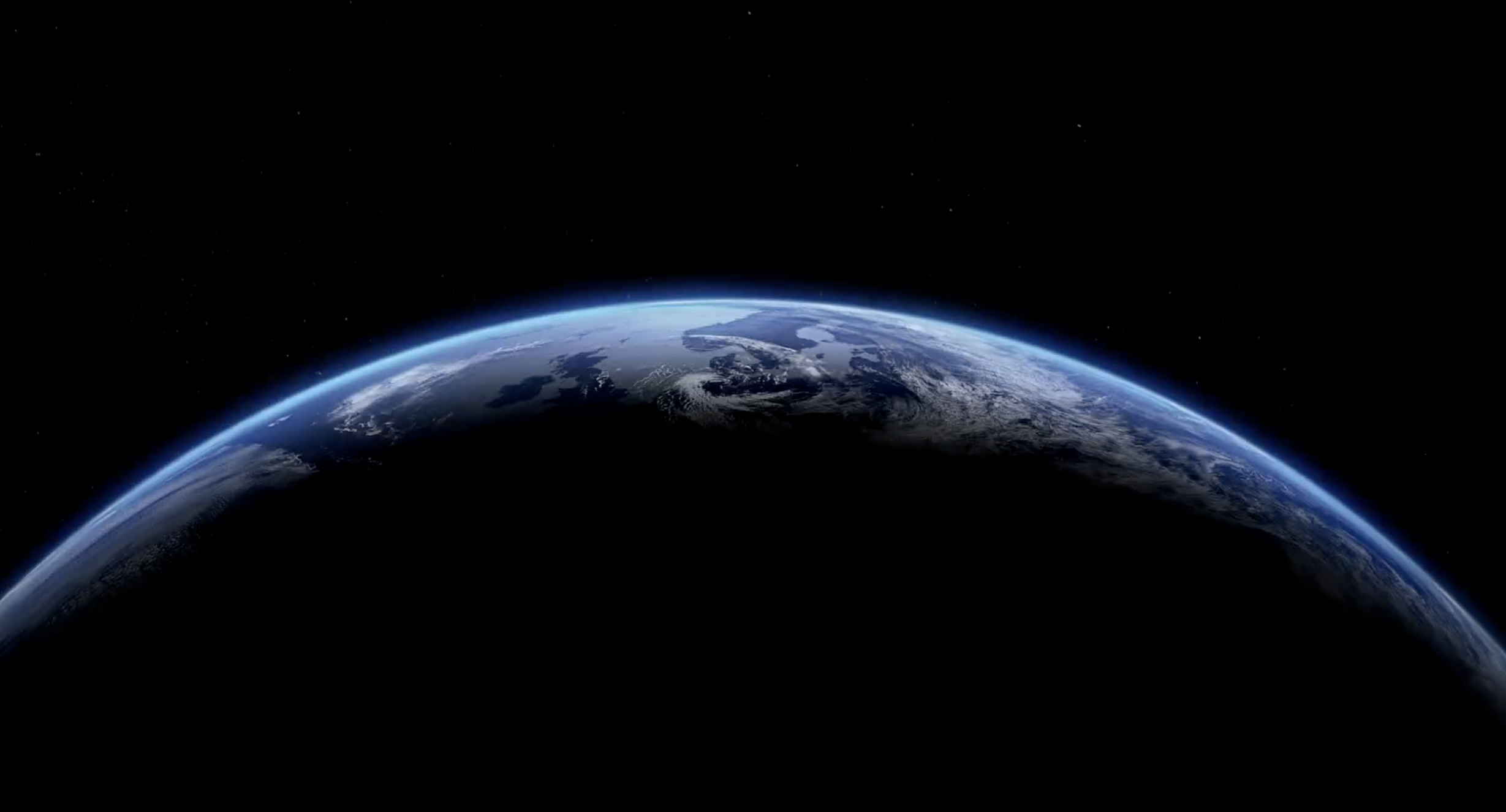
As the capsule ascends, the world below begins to soften. Cities blur into geometry. Coastlines become brushstrokes. Borders — so fiercely defended on the ground — dissolve entirely. Then comes the curve.
The Earth reveals itself not as a map, but as a body — round, alive, suspended in darkness. The sky deepens into an inky gradient, and the atmosphere thins into a delicate blue halo, astonishing in its fragility. There is no roar here. No drama. Only quiet awe. Time stretches. Silence settles. The experience resists urgency. You are not passing through space — you are hovering at its edge, suspended between the familiar and the infinite.
The View That Changes the Viewer
There is a moment — often described by those who have seen the Earth from above — when awareness expands so suddenly it feels almost physical. An instant when perception fractures and reforms at once. The planet below is no longer scenery. It becomes presence.
From the edge of space, the Earth appears less like a destination and more like a living body — luminous, interconnected, quietly intelligent. Oceans resemble breath. Continents feel cellular. The atmosphere clings to the planet like a fragile membrane, a reminder of how delicately everything holds together.
Those who experience this perspective struggle to name it. They speak instead of overwhelming emotion — an explosion of awareness, a sense of oneness so intense it borders on ecstasy. Of feeling profoundly removed and yet impossibly connected at the same time. The sensation is humbling, disorienting, and deeply intimate. Psychologists describe this state as awe — the mind’s response to vastness, and its urgent need to reorganize itself in the presence of something greater than comprehension. But language rarely captures what the moment delivers: clarity without explanation, emotion without narrative, and an unmistakable understanding that the Earth is not something beneath us, but something we belong to.
Zephalto’s vision rests precisely here — not in spectacle, but in this internal shift. By lifting travelers gently above the world, it invites a renewed intimacy with it. A chance to see the planet not as territory, nor resource, nor backdrop, but as something vibrant, vulnerable, and shared. The journey does not end at altitude. It continues inward.
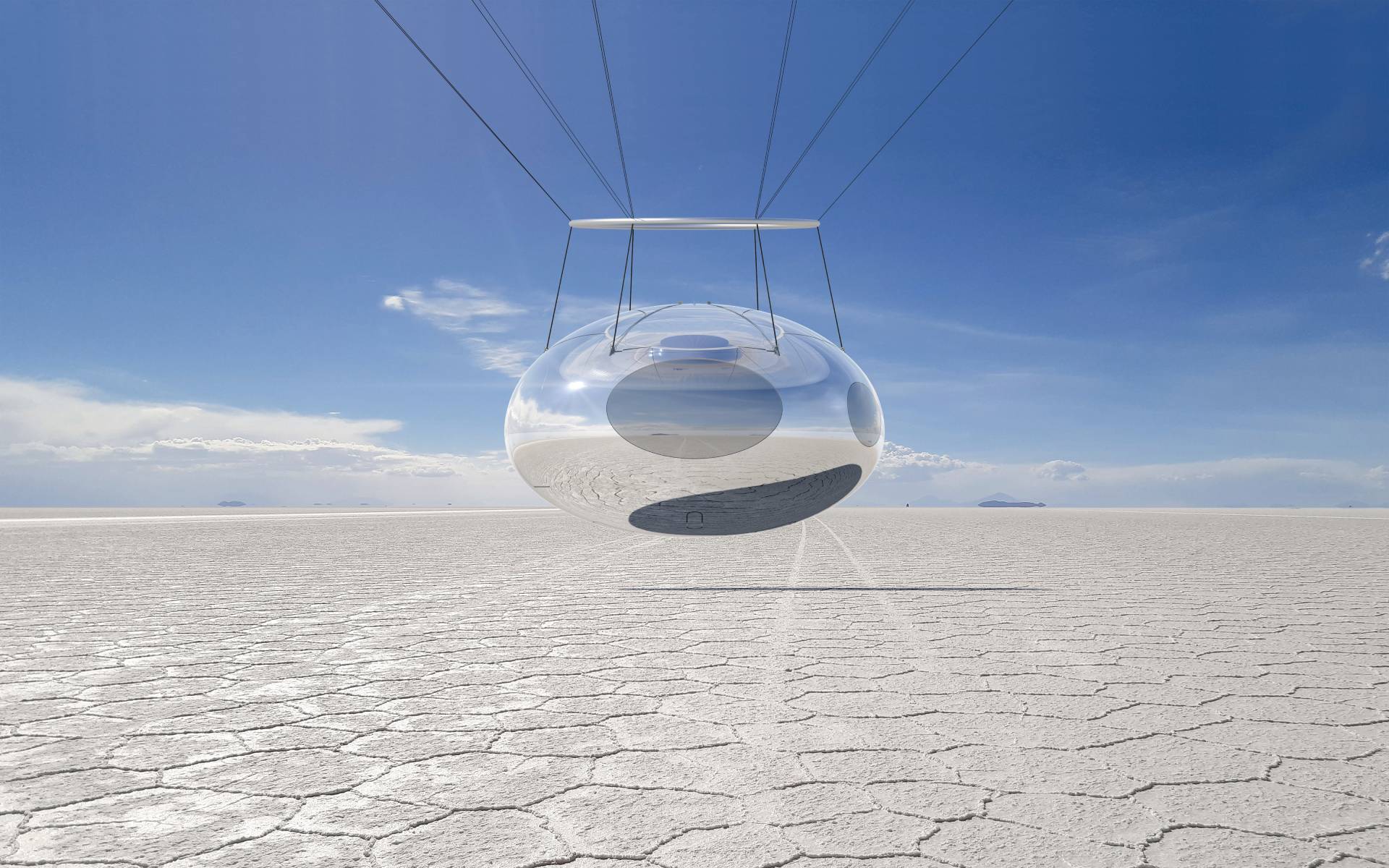
A sculptural, pressurized capsule designed to move in harmony with the elements, Zephalto’s vessel is light, elegant, and quietly resilient. Framed by wide panoramic windows and a reflective silver surface, it dissolves into the landscape — allowing the beauty of Earth, atmosphere, and space to take center stage.
Space Travel Without Escape Velocity
What makes Zephalto particularly compelling is not just where it goes, but how responsibly it gets there. By choosing a balloon- powered ascent over traditional propulsion, the experience dramatically reduces environmental impact while embracing a slower, more reflective model of exploration. This is space travel without aggression. Without extraction. Without the need to leave scars behind.
It acknowledges a truth that modern travelers increasingly understand: the future of exploration must be gentler than its past. That reverence, not domination, is the only sustainable relationship with the unknown.
What Comes After First Class?
For decades, the evolution of travel has been measured in legroom, lounge access, and the illusion of frictionless movement. But Zephalto suggests that the next chapter is not about comfort alone — it is about consciousness. When the most extraordinary journeys are no longer destinations but states of awareness, travel becomes something deeper than consumption. It becomes introspection. Perspective. Return. Because no one comes back from the edge of space unchanged.
Perhaps the most radical idea behind Zephalto is not that it takes us closer to the stars, but that it brings us back to Earth with sharper eyes. In floating above the planet — suspended between atmosphere and infinity — we are reminded of travel’s oldest purpose: to make us smaller, wiser, and more connected to the fragile world that carries us. In the end, the ultimate journey is not about leaving Earth behind. It is about learning how to see it — truly — for the first time.
For readers inspired to take this extraordinary journey and find a certified Zephalto partner, further information is available via our inquiry form.





Leave a Reply