




I have spent most of my life around weights, and resistance training has always made intuitive sense to me, particularly when it comes to changing the way the body looks and performs.
Muscle responds to resistance. Challenge it sufficiently, allow it to recover, and the body adapts. The principle is remarkably straightforward, even if the physiology behind it is not.
It is also why I have never been particularly persuaded by fitness trends simply because they promise a new way to “sculpt” the body. No exercise can magically lengthen a muscle or selectively melt fat from the area working hardest. But there are intelligent ways to create muscular tension, develop strength and endurance, and influence body composition over time. And that is what made me curious about the Lagree workout.
At first glance, it seems far removed from the weight room. There are no barbells or racks. The movements are extraordinarily slow. The equipment looks more closely related to a Pilates Reformer than anything you might associate with conventional strength training.
Look beneath the surface, however, and some of its fundamental ideas are surprisingly familiar: resistance, muscular overload, controlled tempo and sustained tension. In other words, the language is different. The equipment is different. But the body is still being asked a very familiar question: can you keep producing force when the muscle would much rather stop?
So, What Exactly Is Lagree?
The first thing to understand about Lagree is what it is not. It is not Pilates. The confusion is understandable. Both can involve a carriage-based machine, springs, controlled movements, and a considerable amount of core work. Visually, the resemblance is obvious. Physiologically and philosophically, however, they are not the same thing.
The Lagree Method was developed by French-born Sébastien Lagree, who incorporated principles associated with resistance and bodybuilding into a machine-based workout designed to create sustained muscular effort while keeping impact relatively low. The equipment evolved alongside the method, ultimately producing the Megaformer — the imposing machine now most closely associated with Lagree.
The body is considerably less interested in branding than the fitness industry is
Rather than separating strength, muscular endurance, balance, core stability and cardiovascular demand into entirely different sessions, Lagree attempts to challenge several of these qualities within one continuous workout. And one of its defining characteristics is slowness.
Movements are deliberately controlled. Momentum is discouraged. Transitions are kept short. Resistance is maintained as the body moves through an exercise, creating the prolonged muscular effort responsible for the notorious Lagree “burn.” This is where things become scientifically interesting.

The Science of the Slow Burn
Anyone who has ever slowed down a squat knows that five repetitions can suddenly feel like fifteen. There is a reason. When we move a resistance quickly, momentum can contribute to carrying the load through parts of the movement. Slow things down, and there is less opportunity to use acceleration to escape the difficult portions of an exercise. The muscles have to continue producing force. In resistance-training terminology, this is commonly discussed in relation to time under tension. But this is also where we need to separate good physiology from good marketing.
Time under tension can contribute to the overall training stimulus. Still, scientific research does not support the simplistic conclusion that the slower a repetition becomes, the more effective it automatically becomes. Research examining repetition duration suggests that muscle growth can occur across a relatively broad range of movement tempos. Extremely slow repetitions have not been shown to possess some unique muscle-building advantage. In other words, slow is not magic.
What slowing a movement can do extremely effectively is remove some of the shortcuts. Reduce momentum, maintain resistance, and keep a muscle working with little respite, and a comparatively modest external load can become surprisingly demanding. This helps explain why someone perfectly comfortable lifting substantial weights can suddenly find themselves humbled by springs and a moving carriage. The number written on a dumbbell is only one way of manipulating muscular demand.
Why Your Muscles Start to Shake
And then comes the shake. Anyone watching a Lagree class for the first time may notice legs visibly trembling. At the same time, participants attempt to maintain what appears, from the outside, to be an almost absurdly slow movement.
It is tempting to interpret shaking as evidence that something extraordinary is happening to the muscle. The reality is less glamorous, but perhaps more interesting.
As muscles fatigue, the neuromuscular system continually adjusts how force is produced and coordinated. Trembling can emerge as fatigue accumulates and maintaining smooth force production becomes increasingly difficult. It tells us the neuromuscular system is being challenged.
It does not, by itself, tell us that the exercise is producing greater muscle growth, burning more fat, or delivering better results. That distinction applies far beyond Lagree.
Discomfort is information. It is not proof of effectiveness. A workout can feel brutal and still be badly designed. The interesting question is therefore not whether Lagree makes muscles shake. It is why they are being driven toward fatigue in the first place.
Low Impact Does Not Mean Low Intensity
This may be one of the most useful distinctions Lagree brings into the contemporary fitness conversation. Somewhere along the way, we began treating “low impact” as another way of saying “easy.” Physiologically, the two are not synonymous.
Impact refers to the mechanical forces associated with movements such as running, jumping, and landing. Intensity describes how demanding an activity is — and even intensity needs context, because cardiovascular intensity and muscular intensity are not necessarily the same thing. A muscle does not require jumping to work hard. Give it sufficient resistance and ask it to continue producing force as fatigue accumulates, and muscular intensity can become very high while external impact remains relatively low.
This is an important part of Lagree’s appeal. The moving carriage, spring resistance and controlled tempo allow considerable muscular effort without building the workout around repeated pounding, jumping or explosive landings. But “low impact” should never be confused with “risk free.” Technique still matters. Resistance needs to be appropriate. Fatigue can compromise control, and individual injuries or medical conditions need to be considered. Low impact changes the nature of the stress placed on the body. It does not remove stress altogether. Nor should it. Adaptation requires stress. The objective is to apply the right kind.
Lagree Versus Pilates
The distinction deserves its own explanation because Lagree and Pilates continue to be grouped together. Pilates and Lagree can both involve controlled movement, core stability, and spring-based resistance. The machines also share enough visual characteristics to make the comparison inevitable. Their intentions, however, are different. Pilates originated as Joseph Pilates’ system of physical conditioning, with control, precision, breathing, alignment and quality of movement among its fundamental principles.
Lagree developed with a stronger emphasis on sustained muscular tension, resistance, fatigue and continuous transitions, drawing explicitly on concepts associated with strength and bodybuilding. Even the machines serve different purposes. A Pilates Reformer is designed around the Pilates method. The Megaformer evolved specifically around Lagree, providing multiple positions and resistance configurations intended to facilitate continuous loading and rapid transitions.
So describing Lagree as “Pilates on steroids” may convey how difficult a class feels. Scientifically, it tells us very little. There is overlap between the two. There is also a fundamental difference in intention.
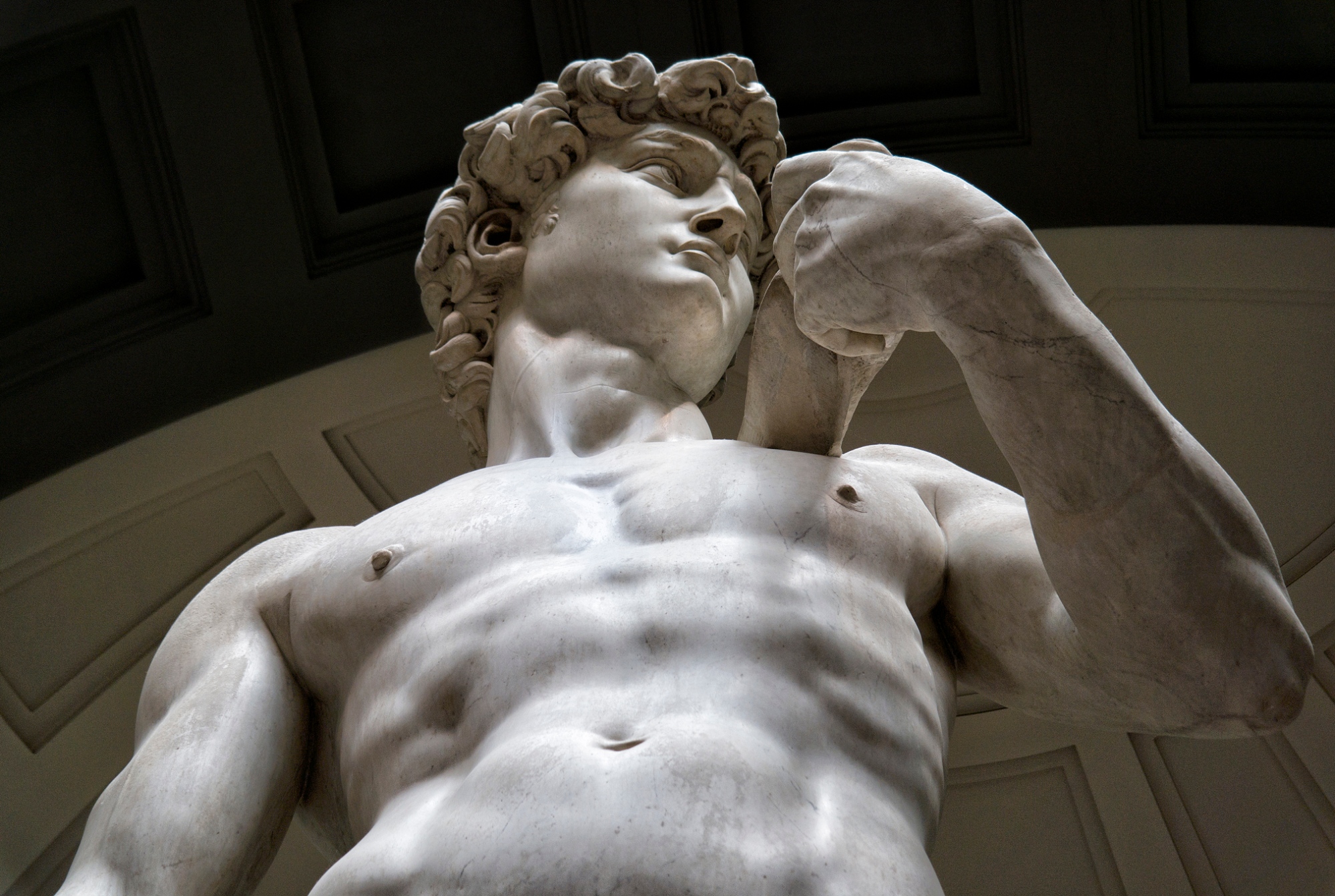
The art of sculpting the human form — Michelangelo’s David
Can Lagree Actually Build Muscle?
This is perhaps the question that interests me most. Because if we are talking about sculpting the body, sooner or later we have to talk about muscle. And this is where resistance-training science has become particularly interesting.
For years, gym culture tended to equate muscle growth with lifting heavy weights. We now know the picture is more nuanced. Research suggests that muscle hypertrophy can occur across a fairly broad spectrum of resistance loads when the muscle receives sufficient stimulus and training volume. Heavier loads are not the only way to encourage muscle growth. That gives some physiological credibility to what happens during Lagree.
You do not necessarily need an extremely heavy barbell to create meaningful muscular tension and fatigue. Slow repetitions, continuous resistance, substantial effort, and limited recovery can make lighter resistance remarkably demanding. But there is an important qualification.
Building muscle and building maximal strength are not the same objective. Research comparing lower- and higher-load resistance training indicates that both can stimulate hypertrophy under appropriate conditions, while heavier loads generally retain an advantage when the objective is maximal strength. That distinction is fundamental, because it brings us to another question.
Train for the body you want to live in, not simply the one you want to look at
Can Lagree Replace Weight Training?
For every purpose? Probably not. And I do not think it needs to. If your objective is to maximize a barbell squat, deadlift, or bench press, progressively heavier loading and specificity matter.
If explosive power is the objective, moving extraordinarily slowly cannot be the only quality you train. Traditional resistance training also makes progression remarkably measurable. We can add weight to a bar, increase repetitions, manipulate sets and quantify load over time.
Lagree offers its own progression variables — resistance, positioning, tempo, range of motion and exercise complexity — but it operates in a different training environment. The more interesting question, therefore, is not which method wins. It is what each method gives us.
Heavy resistance training develops qualities that Lagree may not optimize. Lagree, meanwhile, combines muscular endurance, control, stability, resistance and sustained effort in a way that conventional weight training does not necessarily reproduce. For me, that is where it becomes particularly compelling.
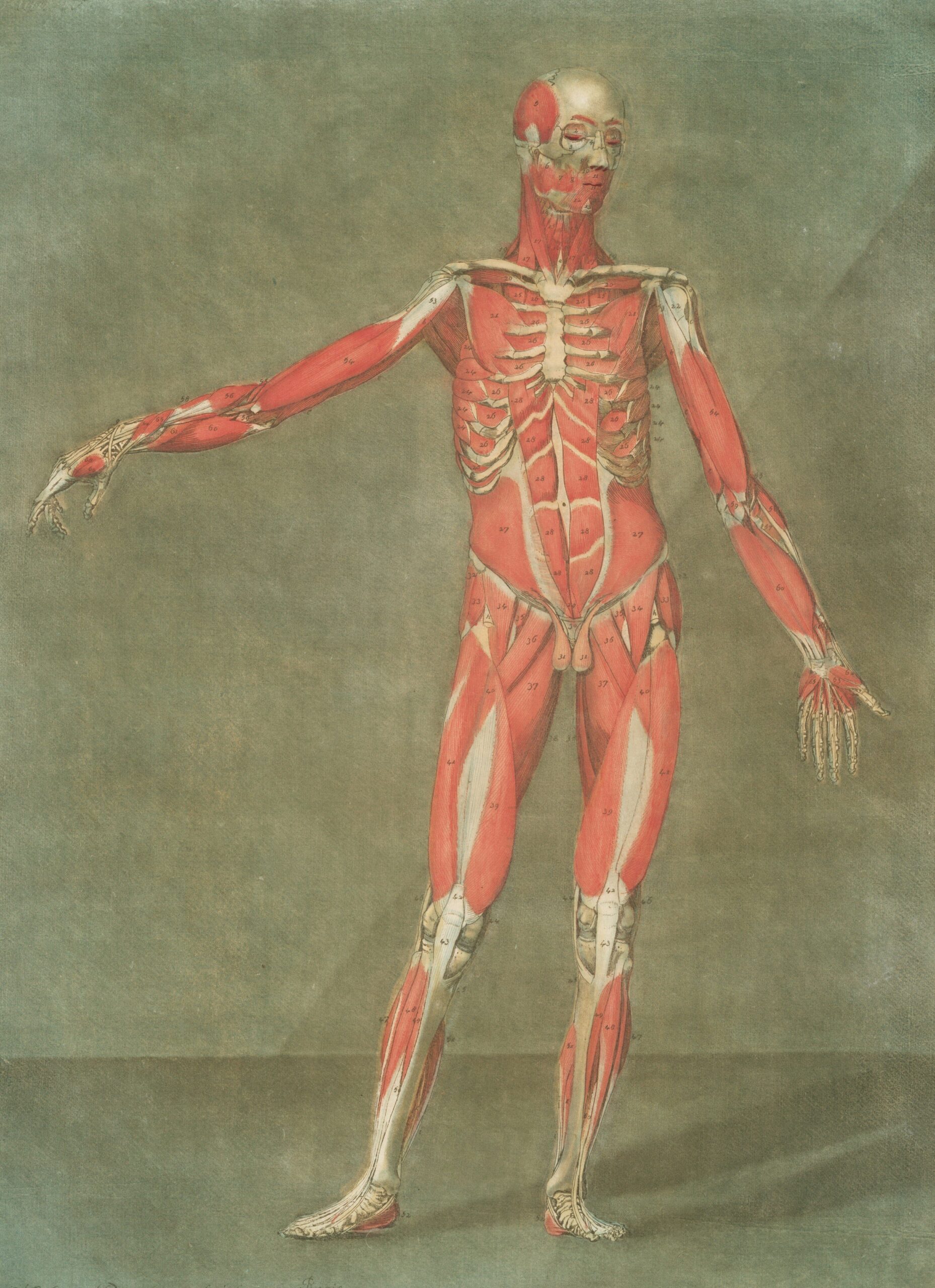

The Body Does Not Know the Name of Your Workout
Muscles do not know whether they are performing Lagree, bodybuilding, Pilates, or something that has not yet been invented. They respond to stimuli.
Mechanical tension. Effort. Range of motion. Fatigue. Recovery. Repeated exposure. Progressive challenge. That is one reason I remain wary of arguments suggesting that any branded fitness method possesses some unique physiological secret.
The body is considerably less interested in branding than the fitness industry is. What a good training method can do, however, is arrange established principles intelligently. And Lagree does something particularly interesting with resistance, control, and time. It is not simply about how much weight you can move, but how long you can keep the muscle working while maintaining control. It is a different way of creating muscular demand, and that is precisely what makes Lagree so interesting.
And What About Cardio?
Lagree is frequently described as combining strength training and cardio within one workout. Here, too, the terminology deserves some discipline.
Continuous movement, large muscle groups working simultaneously, and very short transitions can elevate heart rate and create substantial metabolic demand. Anyone working continuously under resistance is unlikely to mistake the experience for rest.
But an elevated heart rate during resistance exercise does not automatically make that exercise physiologically equivalent to dedicated aerobic training. Cardiorespiratory fitness has its own adaptations.
If improving aerobic capacity is an important training objective, dedicated cardiovascular exercise still has a place. Again, this does not diminish Lagree. It simply avoids an increasingly common fitness-industry habit of claiming that one workout can optimally accomplish everything.
Strength, Aging and the Longevity Question
This is where the conversation becomes bigger than aesthetics. Many of us may first enter a gym because we want to change the way our body looks. Eventually, another realization begins to matter just as much: we want it to keep working.
Maintaining muscle mass, strength and physical capacity becomes increasingly important as we age, and resistance training has become a central component of healthy-ageing recommendations for good reason.
The latest American College of Sports Medicine analysis of resistance-training evidence reinforces something wonderfully uncomplicated: resistance training works, but how we train should reflect what we are trying to achieve. Strength, hypertrophy and power are related, but they are not identical adaptations. And for women, particularly as we move through and beyond menopause, the conversation inevitably reaches another subject: bone. This is an area where I would resist overselling Lagree.
Resistance exercise can positively influence bone mineral density, and recent systematic reviews continue to support resistance training as part of strategies for maintaining skeletal health. But the type, magnitude, and progression of mechanical loading matter. There is not currently sufficient independent evidence to assume that Lagree provides the same osteogenic stimulus as appropriately programmed conventional resistance training simply because it involves resistance.
That distinction is important. If longevity is the objective, I would therefore not think of Lagree instead of every other type of training. I think it can contribute to a broader physical strategy: resistance, muscular endurance, balance, stability, controlled movement, and the ability to create significant muscular demand without relying on repeated high-impact exercise.
Then retain other forms of training for the adaptations they produce particularly well. That may not be as seductive as discovering the “perfect workout.” It is considerably closer to how the human body actually works.
The Case for Moving Slowly
After a lifetime around weights, I am not particularly interested in fitness trends simply because they are new. What interests me is whether the training principle underneath them makes sense.
Lagree does. Not because moving slowly is somehow magical. Not because shaking muscles prove that a workout is superior. And certainly not because the Megaformer has somehow rewritten human physiology. It makes sense because resistance, control, muscular tension and effort are principles the body understands very well. Perhaps that is the most interesting thing about Lagree.
Beneath the unfamiliar machine, the slow choreography and the modern fitness vocabulary lies an idea that is actually rather old: If you want the body to adapt, you have to give it a reason to. Lagree changes the way we deliver that reason. And for someone like me, who has always understood the logic of resistance when it comes to building and shaping the body, that is precisely what makes the method worth watching.
The Science Behind the Story
The physiological analysis in this article draws primarily on independent resistance-training research. Scientific research specifically examining the Lagree Method remains limited; established findings from conventional resistance-training studies should therefore not automatically be interpreted as evidence that Lagree produces identical outcomes.
American College of Sports Medicine (2026). Resistance Training Prescription for Muscle Function, Hypertrophy, and Physical Performance in Healthy Adults: An Overview of Reviews. Medicine & Science in Sports & Exercise. The updated position stand synthesizes the resistance-training literature and emphasizes matching training variables to specific objectives such as strength, hypertrophy, and power.
Schoenfeld, B.J., Ogborn, D. & Krieger, J.W. (2015). Effect of repetition duration during resistance training on muscle hypertrophy: a systematic review and meta-analysis. Sports Medicine, 45(4), 577–585. This review examined repetition tempo and muscle growth and found hypertrophy across a relatively broad range of repetition durations rather than establishing extremely slow repetitions as inherently superior.
Schoenfeld, B.J., Grgic, J., Ogborn, D. & Krieger, J.W. (2017). Strength and hypertrophy adaptations between low- vs.high-load resistance training: a systematic review and meta-analysis. Journal of Strength and Conditioning Research. The analysis found that both lower and higher resistance loads can stimulate muscle hypertrophy, while higher loads showed an advantage for maximal strength development.
Shojaa, M., von Stengel, S., Kohl, M., Schoene, D. & Kemmler, W. (2020). Effects of dynamic resistance exercise on bone mineral density in postmenopausal women: a systematic review and meta-analysis with special emphasis on exercise parameters. Osteoporosis International, 31, 1427–1444. Examines the relationship between resistance exercise parameters and bone mineral density in postmenopausal women.
Zhao, F. et al.(2025). Optimal resistance training parameters for improving bone mineral density in postmenopausal women: a systematic review and meta-analysis—Journal of Orthopedic Surgery and Research. The review found beneficial effects of resistance training at several skeletal sites while highlighting the importance of training intensity, frequency, and duration.
About Lagree: Information concerning the origins and principles of the Lagree Method, Sébastien Lagree, and the Megaformer is based on official Lagree Fitness material. Lagree-specific physiological claims have been treated separately from independently established resistance-training evidence.
About the author


-
 In the Path of the Eclipses, Spain, Egypt, and Beyond
 -
 From Tribeca to Tokyo: The Global Story of Nobu Hotels
 -
 Oman Refined. A Considered Guide for the Thoughtful Traveler
 -
 Scidmore Sakura, Where Blossoms Bridge Worlds and Generations
 -
 7132 Therme, The Architecture of Stillness




Leave a Reply