




Dubai is a city where the future is always unfolding, its skyline a dazzling testament to ambition and imagination. Yet step through the grand gates of Al Habtoor Palace, and you enter a world apart—a realm where ceremony and classical elegance reign, and every moment is wrapped in the attentive art of true hospitality. Here, the city’s pulse softens, replaced by the quiet grandeur and timeless beauty of a palace created to delight the senses and soothe the soul.
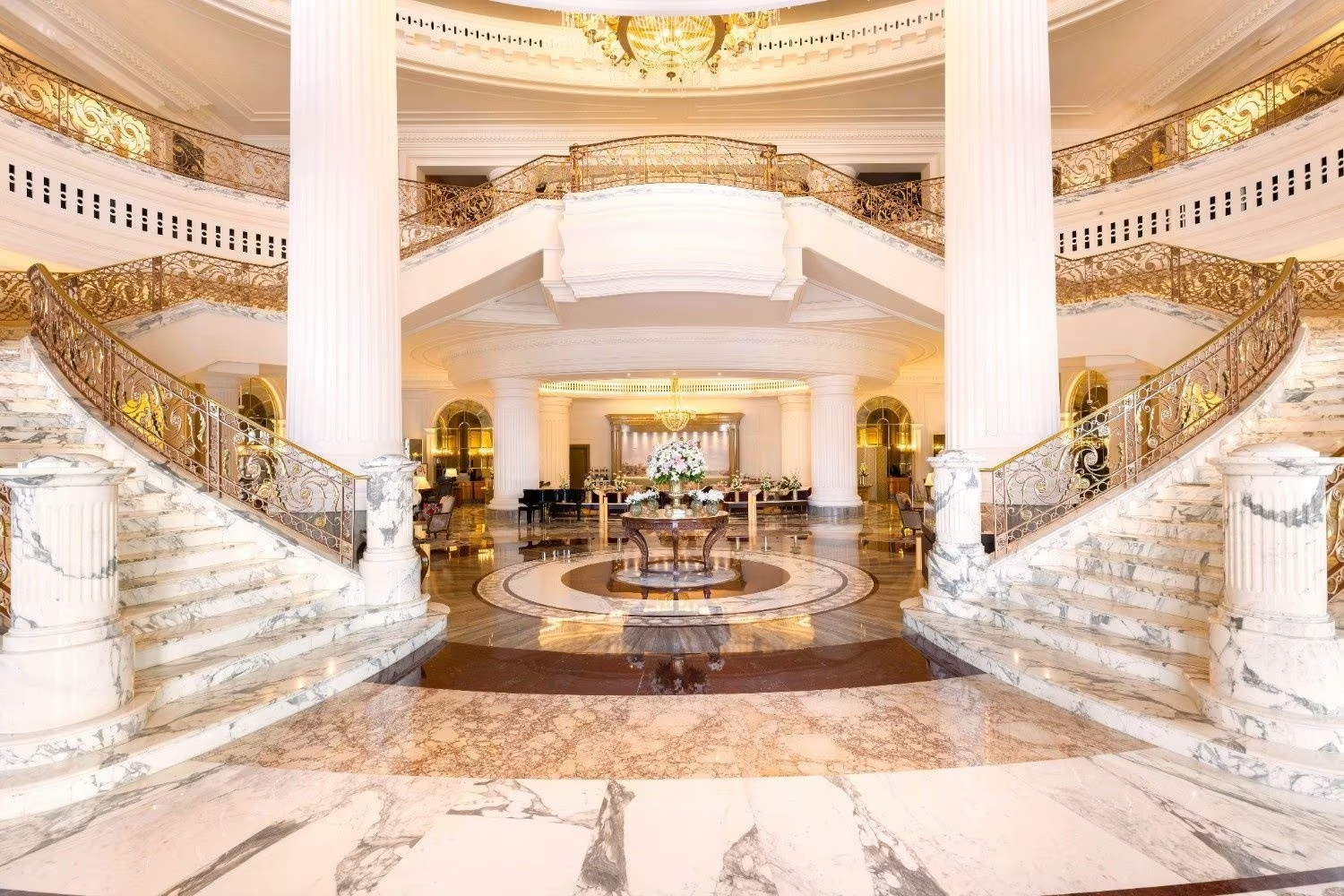
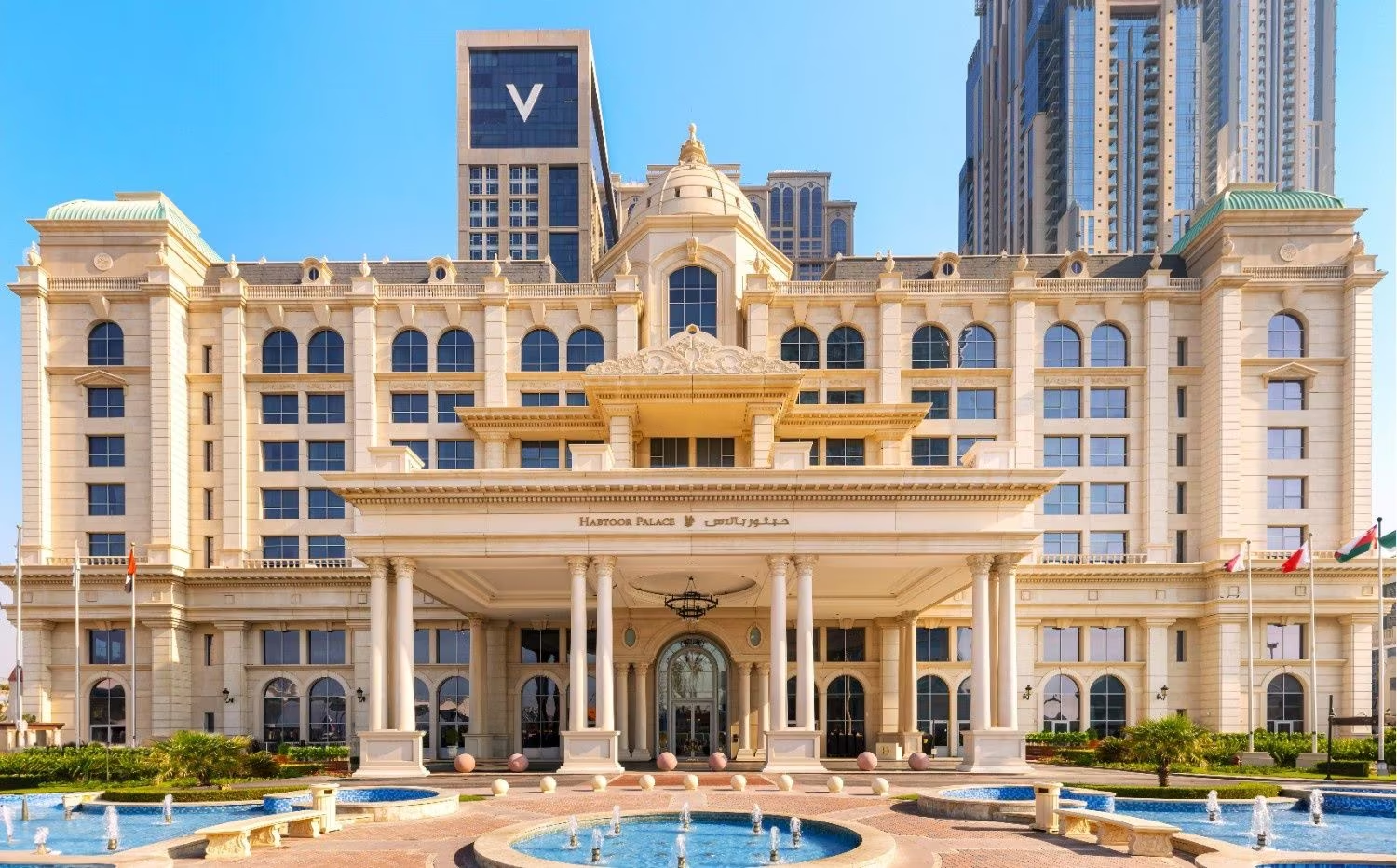
Nestled within Al Habtoor City on the banks of the Dubai Water Canal, the hotel draws inspiration from Europe’s legendary palaces and grand hotels. Its dramatic façade, sweeping formal gardens, and Beaux-Arts architecture signal an arrival that is both majestic and intentionally set apart from the futuristic glass towers surrounding it. To cross the threshold is to be transported—every detail orchestrated to evoke awe and anticipation.
This is not a discreet or minimalist interpretation of luxury. Al Habtoor Palace is unapologetically grand—sweeping, luminous, and richly adorned with marble, soaring chandeliers, and intricate details at every turn. Yet the palace’s soul transcends its beauty: beneath its European grandeur lies a deeply rooted, regional philosophy of hospitality—one that is generous, intuitive, and intimately attentive to every guest.
The palace also has a deeper story: one that begins not amid marble and chandeliers, but in a one-room palm-frond home beside Dubai Creek.
From Al Shindagha to the Palace
Khalaf Ahmad Al Habtoor spent part of his childhood in Al Shindagha, one of Dubai’s oldest neighborhoods, located beside the Creek around which much of the city’s early commercial and cultural life developed. His family lived in a modest barasti home built from palm fronds. His father traded in pearls and gold, but the pearling industry's decline brought financial hardship. These early experiences introduced Al Habtoor to the realities of work, commerce, and personal responsibility long before he could have imagined the business that would one day carry his name.
He began earning money in his teens and later gained commercial experience working for an established Dubai businessman. In 1970, with limited financial resources but considerable determination, he founded Al Habtoor Engineering. The company grew during the formative years of the United Arab Emirates, contributing to significant infrastructure projects as the young nation began building its future. In 1979, the family entered the hospitality industry with the Metropolitan Hotel, beginning a relationship with hotels that would develop over the following decades.
What started as a small engineering business eventually became the Al Habtoor Group, with interests spanning hospitality, construction, real estate, automotive, education and publishing. Its story unfolded alongside modern Dubai. The family did not simply witness the city’s remarkable transformation; its businesses became part of it.
Seen through this history, Al Habtoor Palace represents far more than architectural grandeur. It embodies the distance traveled between the palm-frond homes of old Dubai and the international city that surrounds the palace today.
A Palace with a Personal Story
Al Habtoor Palace reflects Khalaf Ahmad Al Habtoor’s appreciation of European architecture, art and culture. Rather than presenting grandeur as an abstract design concept, the hotel carries traces of its founder’s travels, interests and relationships. The art collection displayed throughout the interiors lends the palace some of its personality, while the two signature accommodations—the B Suite and the Sir Winston Churchill Suite—introduce more specific narratives.
The B Suite adopts a glamorous, contemporary character through leather finishes, dark wood veneers and graphic patterns. The expansive Sir Winston Churchill Suite, meanwhile, reflects Al Habtoor’s longstanding affinity with the United Kingdom.
Spanning 913 square meters and arranged over two levels, the three-bedroom suite includes formal reception and dining spaces, a private majlis, a study, and an internal staircase leading to a rooftop plunge pool overlooking the city.
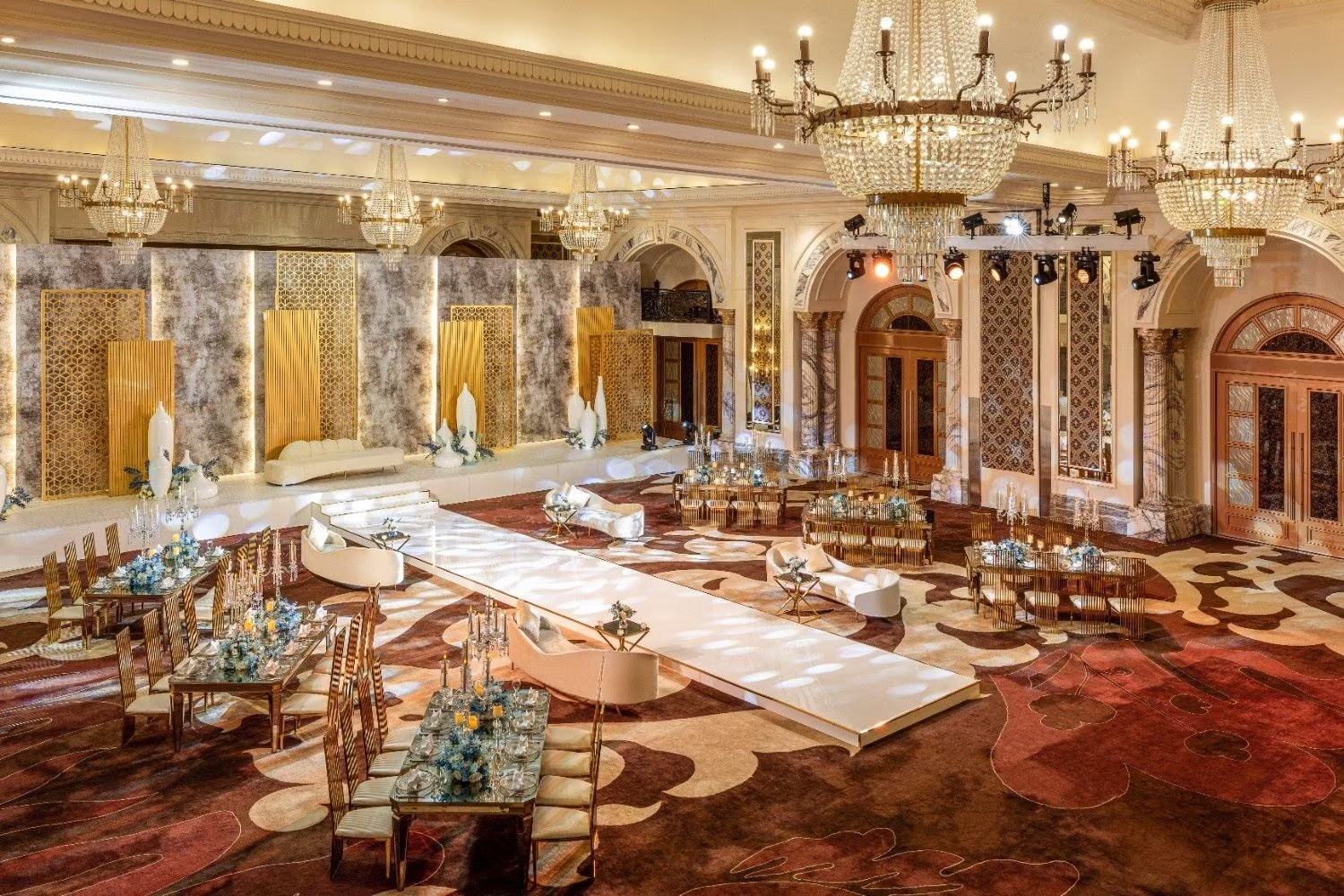
These suites may sit at the most exceptional end of the hotel’s accommodation. Still, they reveal something essential about the property as a whole: Al Habtoor Palace was not conceived merely as somewhere to sleep. It is a place designed for receiving, gathering and living on a grander scale.
The Luxury of Space
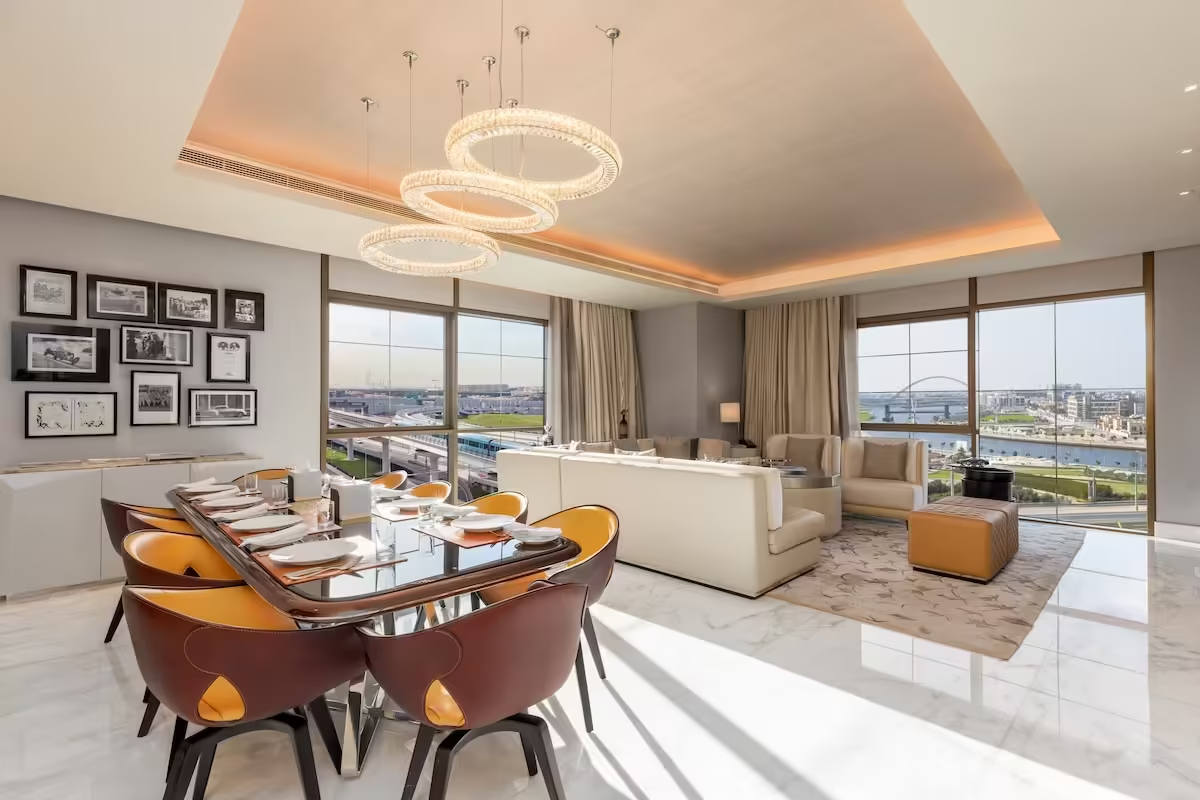
With 182 rooms and 52 suites, the palace feels substantial without losing its residential character. Even the entry-level rooms begin at a generous 55 square meters, offering a sense of space that is increasingly valuable in the center of a major city.
The interiors favor warm, composed elegance over passing design trends. Rooms are arranged as private retreats, while the larger suites unfold into separate living rooms, dining areas, studies and walk-in wardrobes. Some incorporate private treatment rooms, steam facilities or spaces created for entertaining.
Sweeping views draw the eye across tranquil gardens, the shimmering canal, and the iconic Dubai skyline, creating a living dialogue between the palace’s classical interiors and the vibrant energy of the city beyond. Each window frames a tableau—an ever-changing interplay of old-world refinement and cosmopolitan spectacle.
The result is a hotel that works particularly well for guests who enjoy formality without rigidity and spaciousness without isolation. There is room to settle in, to host, and to let the pace of a stay become more measured.
Service as a Quiet Presence
The most memorable luxury is often not the most visible. At Al Habtoor Palace, dedicated butler service brings a more personal dimension to the experience.
A butler may assist with arrival and unpacking, arrange dining reservations or spa appointments, prepare preferred refreshments, organize transport, or quietly attend to the small details that make a room begin to feel familiar.
The value lies not in any single task, but in the continuity of care—the sense that someone understands the rhythm of the stay and is present without becoming intrusive.
Here, the palace’s European aesthetic is enlivened by a uniquely Dubai spirit. Marble and gilded halls set the stage, but it is the warmth and intuition of the service that bring the grandeur to life. Behind every gesture lies an authentic culture of welcome—a belief that every guest should feel not simply attended to, but truly cherished.
A Hotel Made for Lingering
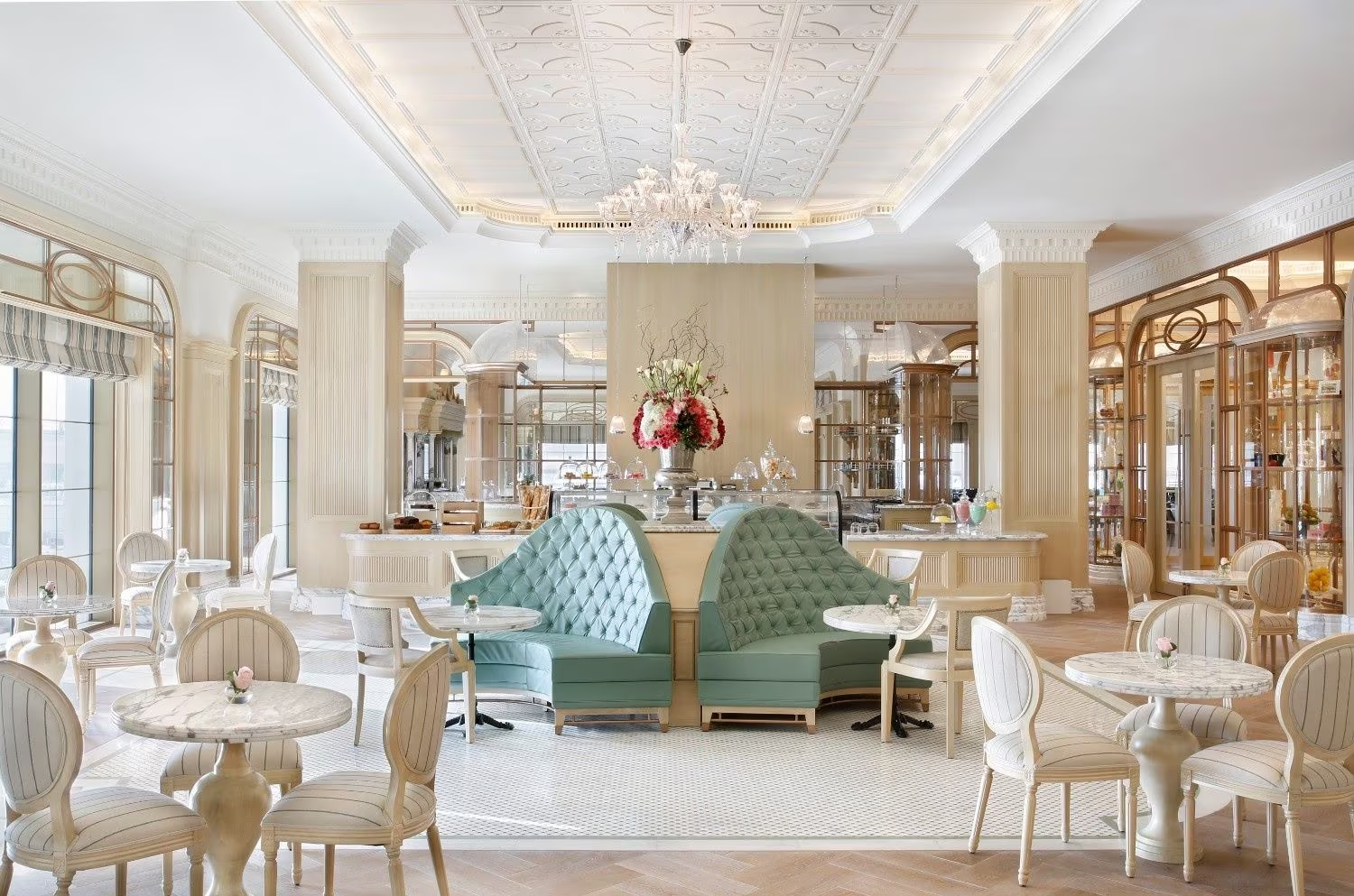
Dining at Al Habtoor Palace moves easily between occasion and ritual. World Cut Steakhouse provides the hotel’s most theatrical dining experience, with dark, polished interiors and a menu centered on premium cuts. Elsewhere, BQ offers a more relaxed setting, while The Polo Bar channels the intimacy of a traditional club lounge.
Le Patio, arranged beneath the high glass dome of the central atrium, captures another side of the hotel. Surrounded by palms and neoclassical details, it invites guests to pause over coffee, conversation, or afternoon tea. These quieter interludes are an important part of the palace experience. Not every moment needs to be programmed; some spaces are made for lingering.
At Silk Spa, the mood becomes more secluded. Treatment rooms and steam and sauna facilities offer a restorative counterpoint to the hotel's formality, while rooftop pools provide open-air respite above the city.
Guests are also within easy reach of La Perle, the theatrical production created by Franco Dragone, where aerial performance, acrobatics and aquatic staging bring a very different kind of spectacle to an evening in Al Habtoor City.
A Different Perspective on Dubai
Al Habtoor Palace occupies an interesting place within Dubai’s hospitality landscape. It doesn't try to express the city through futuristic design or beachfront escapism. Instead, it offers a more classical interpretation of a Dubai stay—one built around generous proportions, ceremonial spaces, and service that still values human attention.
Its location makes the city readily accessible, yet the palace creates a world with its own pace. Mornings can begin beside the canal, afternoons unfold beneath the atrium dome, and evenings move from dinner to theatre without leaving Al Habtoor City.
For travelers drawn to clean-lined minimalism, the hotel’s ornate style may feel exuberant. But for those who appreciate old-world glamour, residential space and the theatre of a true arrival, its character is precisely the point.
Its European references may shape the first impression, but the deeper story belongs firmly to Dubai. It is the story of a boy raised in modest circumstances beside the Creek, of an enterprise established as the United Arab Emirates entered a defining new era and of a family whose journey developed alongside the city itself.
That history lends the palace something that architecture alone could never create. The marble, chandeliers and artworks speak of grandeur, but the family story gives them context. What might otherwise be seen as opulence becomes an expression of aspiration, memory, and distance traveled.
In a city defined by ceaseless transformation, Al Habtoor Palace dares to offer something rare: the confidence to be timeless rather than merely new. Its true luxury lies not just in its opulence, but in the lasting impression it leaves—measured by how a guest feels long after they have departed its luminous halls.
About the author


-
 Mastering the Digital Nomad Lifestyle: How Minimalism and Adaptability Can Become Superpowers
 -
 Dubai's Neighborhoods: Downtown, Between Memory and Modernity
 -
 Under Desert Skies, The Moon Retreat of Mleiha
 -
 Winter Magic in the Fjords, a Ski Touring Journey from Peaks to the Sea
 -
 Al Noor Island: Sharjah’s Dreamscape of Art, Light, and Nature





Leave a Reply