




The first thing you notice, as the ferry edges toward Favignana, is how the island seems to rise from the sea in pale, quarried layers. It’s easy to see why myth and reality blur here. When Christopher Nolan filmed The Odyssey, Favignana became Ithaca—the home Odysseus longs for. The crew built a village below the fort of Santa Caterina, but the real story is in the stone.
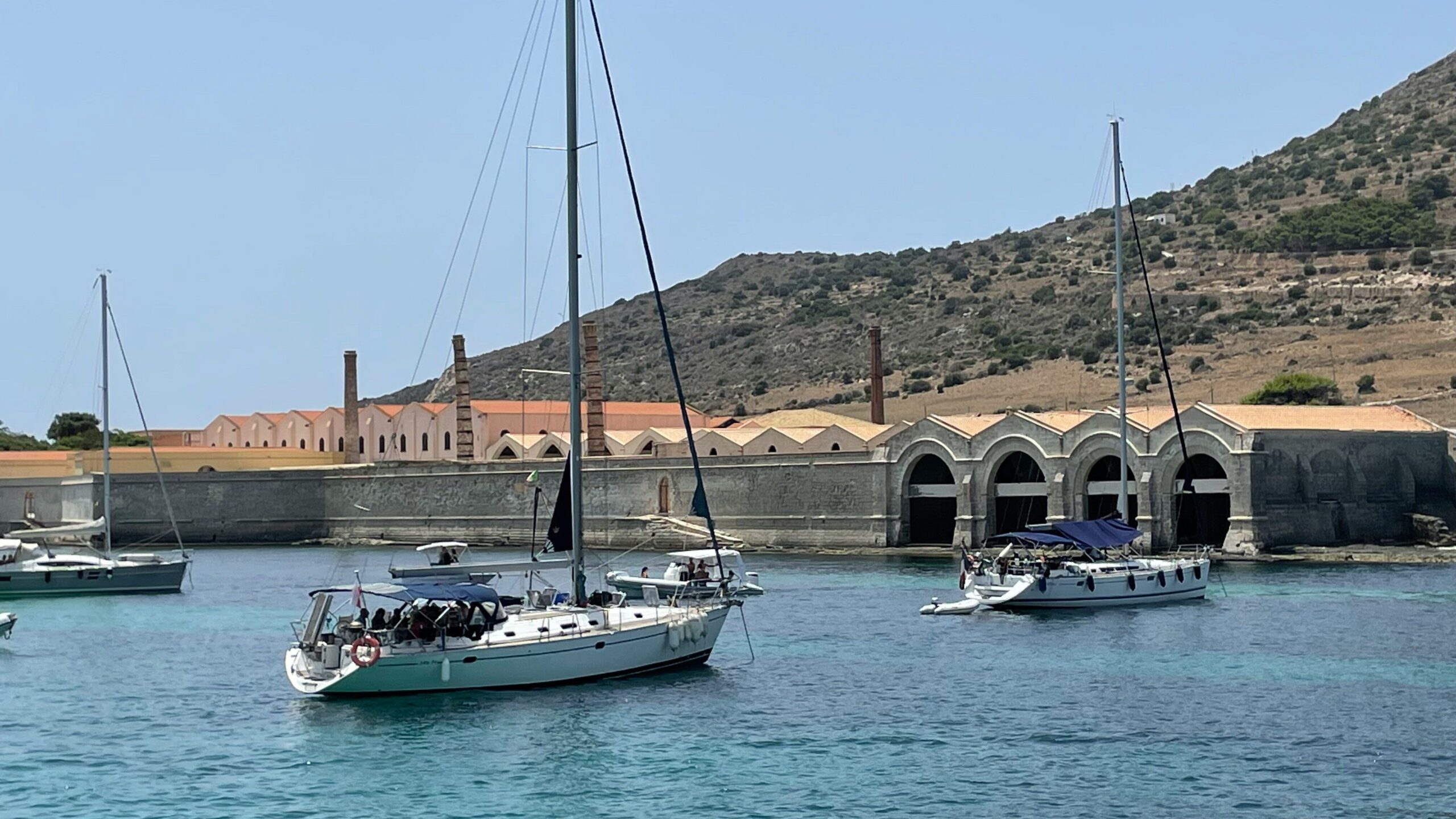
The first building to look for in Favignana’s harbor is a factory. The old Florio tuna cannery stretches along the waterfront, just a short walk from the quay. Before you even think about a swim, drop your bags, linger over coffee in town, and spend an hour wandering the cannery’s halls.
The boats inside the factory
Boats that once braved the mattanza rest beside nets and battered barrels, their wood worn smooth by salt and time. The cauldrons are immense, the packing rooms cavernous, but it’s the voices—recorded, looping through the halls—that linger. Stories of labor and pride, of women gathering in the canteen, fill the space with memory. You sense how many lives once crossed paths here.
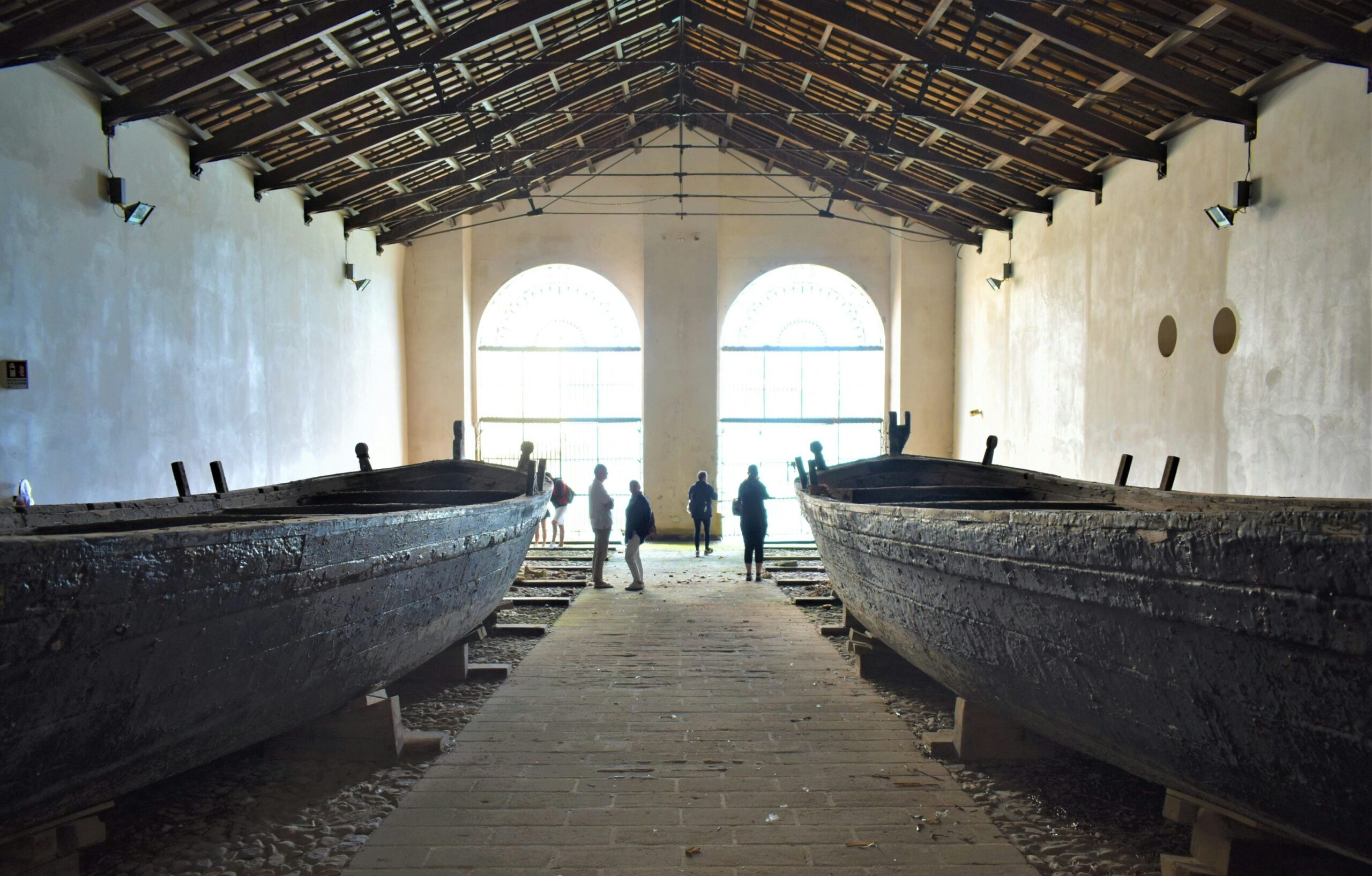
The mattanza was the final act of a centuries-old fishing tradition. A system of nets guided migrating tuna into a last chamber, where the fishermen hauled them aboard. The boats in the museum still carry the weight of that work. Rows of tins and cauldrons tell the rest of the story: cooking, preserving, packing. To see it all under one roof is to stand at the heart of Favignana’s working life.
Favignana is best explored by bicycle, especially on the eastern side where the land flattens and the village gives way to a patchwork of dry-stone walls. Roads tumble toward the sea. Cala Rossa’s water is as clear as legend. Above the waterline, the straight cuts left by quarrymen are still visible in the pale stone.
What grew in the quarries
Look closely at the dry-stone walls and you’ll spot fossilized shells in the pale limestone known locally as tufo. For centuries, quarrymen cut the stone by hand and shipped it to the Sicilian mainland and North Africa. Peer over the edge and the ground drops away: sunken gardens and hollows, meters below the road, are the quarrymen’s quiet legacy.
In these hollows, fig, almond, and citrus trees now root where stonecutters once swung hammers. The quarry walls shelter them from the wind, turning scars in the land into improbable gardens. At the Giardino dell’Impossibile, paths twist between sheer faces softened by green. The Cattedrale Ipogea, a subterranean ecomuseum, brings you closer to the people behind the stone. On the ride back to town, it’s worth peering over the walls. From the road, it’s easy to pass a sunken garden without seeing it.
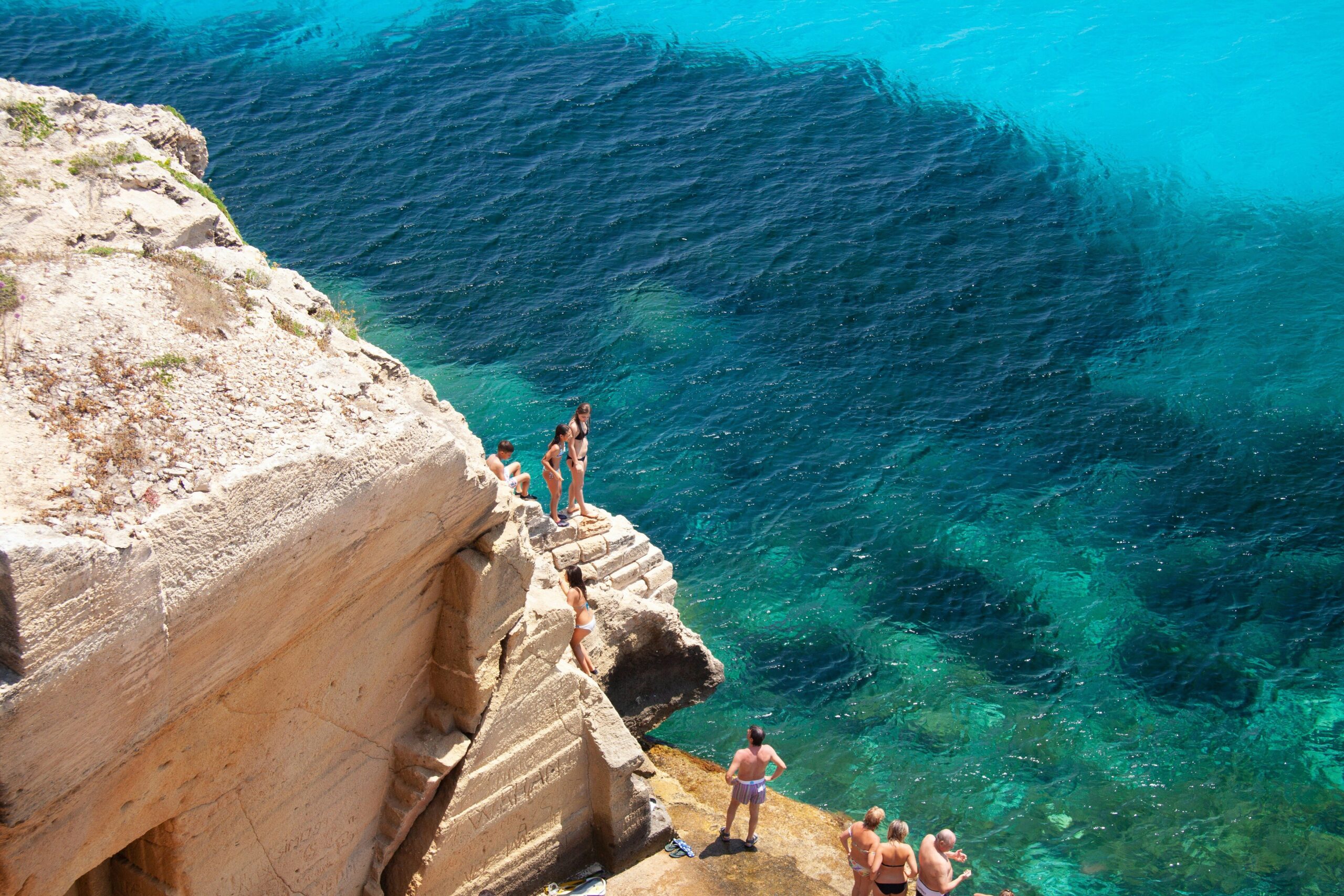
A swim worth coming back for
At Cala Rossa, you climb in from the rocks with Levanzo across the water. If you prefer sand, head to Lido Burrone. With a bike, you set your own rhythm. A cove that looks perfect from the road can feel utterly different once you reach the water, especially when the wind shifts.
The fast ferry from Trapani makes a day trip easy, but Favignana rewards those who linger. Two nights let you slow your pace: a morning wandering the cannery, an afternoon in a sunken garden, time to return to the stretch of coast that calls you back. Order couscous di pesce or ask how the trattoria prepares its tuna, then cool off with gelato or granita.
For a final panorama, take the path up Monte Santa Caterina. From the fort, the island’s story comes into view. By then, you’ll know the landmarks and the shortcuts—the feeling of a place that’s become your own.
Planning Your Visit to Favignana
Getting there. Trapani–Birgi (TPS) is the closest airport. Palermo (PMO) is another option if it suits your flight plans. From either airport, make your way to Trapani’s port, where fast ferries depart for Favignana. Book ahead if you’re traveling in July or August.
When to go. May, June, and September are good choices if you’d like to explore by bike and spend time by the water outside the busiest summer weeks.
Where to stay. Base yourself near the harbor or in the village center if you’d like to walk to dinner and start your rides from town. Two nights give you time for the Florio cannery, a quarry garden, and a return to your favorite cove.
Getting around. Rent a bicycle or an e-bike for the flatter eastern side of the island. Pack sun protection, a refillable water bottle, and swim shoes if you plan to get into the water from the rocks at Cala Rossa. For a sandy beach, head to Lido Burrone.
For more information on what to see and do on the island, visit Visit Favignana




Leave a Reply