




INSIDER STORIES
Some of the most fascinating journeys are not defined by places, but by people.
Some people encounter a culture from the outside; others are forever changed by it, letting it seep into the fabric of their being. For Sensei Kyle Kamal Helou, Japan was not just a place to learn—it became a refuge, a source of healing, and a beacon of meaning. Its philosophy did not simply intrigue him; it offered comfort and hope for questions that haunted him since childhood: how do we face conflict without letting it destroy us, and is it possible for strength to exist without violence.
Born in war-torn Lebanon and later raised in the United States, Kyle’s search for harmony led him first to philosophy and Zen, and ultimately to Shotokan karate-do. What began as physical training gradually became a way of living—one rooted in awareness, discipline, humility, and self-control. His dedication eventually took him to Japan, where he became the first, and so far only, non-Japanese graduate of the prestigious Japan Karate Shoto Federation Instructor Course. Today, he holds a sixth-degree black belt and has guided more than 5,000 students over a career spanning more than 25 years.
Yet karate is only one thread in the tapestry of Kyle’s profound connection to Japan. He is also a master teacher of the shakuhachi, the traditional bamboo flute whose haunting, breath-born tones evoke both vulnerability and strength. In movement and in stillness, the same philosophy quietly pulses: true mastery is not about exerting power over others, but about the difficult, beautiful work of becoming fully present to oneself.
Now based in Dubai, Kyle pours his heart into his HSKD Academy, where karate is shared not simply as self-defense, but as a path to inner transformation—a journey toward character, humility, and compassion. His greater dream is to create a Japanese cultural center in the UAE: a place where karate-do, shakuhachi, and other traditional arts serve as invitations, welcoming people not only to Japanese culture but to a deeper way of life—the quiet resilience and harmony—that have sustained him.
We sat down with Kyle to trace the moments that changed his life, the spiritual principles at the heart of karate-do, and what we can learn from the wisdom of Japanese tradition about living with greater awareness, restraint, and grace.
Q. What first drew you to Japanese culture and philosophy?
A. To explain that, I have to go back to Lebanon in 1984. I was eleven when I survived a missile attack. We were at a beach club when several missiles struck nearby. The earth shook beneath me, the impact threw me into the swimming pool and, although I knew how to swim, I almost drowned.
That experience changed my life. I began asking why human beings feel they must kill one another to resolve problems. Why can we not find a non-violent way? I grew up surrounded by war and disharmony, and because we lived beside the American University Hospital, I also witnessed its human consequences. From an early age, I felt that there had to be another way to live together.
Years later, after moving to the United States, I studied philosophy at university. I encountered the questions humanity has asked for centuries: Why are we here? How can we coexist in harmony? What drives us towards violence? One of my courses was Far Eastern philosophy, and that was where I discovered Zen.
Q. What did Zen reveal to you?
A. Zen is more than a philosophy. Some may call it a religion, but for me it is a spirituality and a way of living grounded in experience. It teaches us to become aware of our experience. Even now, as we speak, I am aware of my breath, of you sitting in front of me, and of memories and ideas moving through my mind. That is awareness; that is mindfulness.
Mindfulness places us fully in the present. We often dwell on the past and wish it had been different, but the past is gone. The future is unpredictable. All we truly possess is this eternal now. That idea of nowness—and the wider presence of Zen within Japanese culture—became deeply meaningful to me.
The ultimate aim of karate lies not in victory or defeat, but in the perfection of the character of its participants.
– Funakoshi Sensei –
Q. How did that philosophical interest lead you to karate?
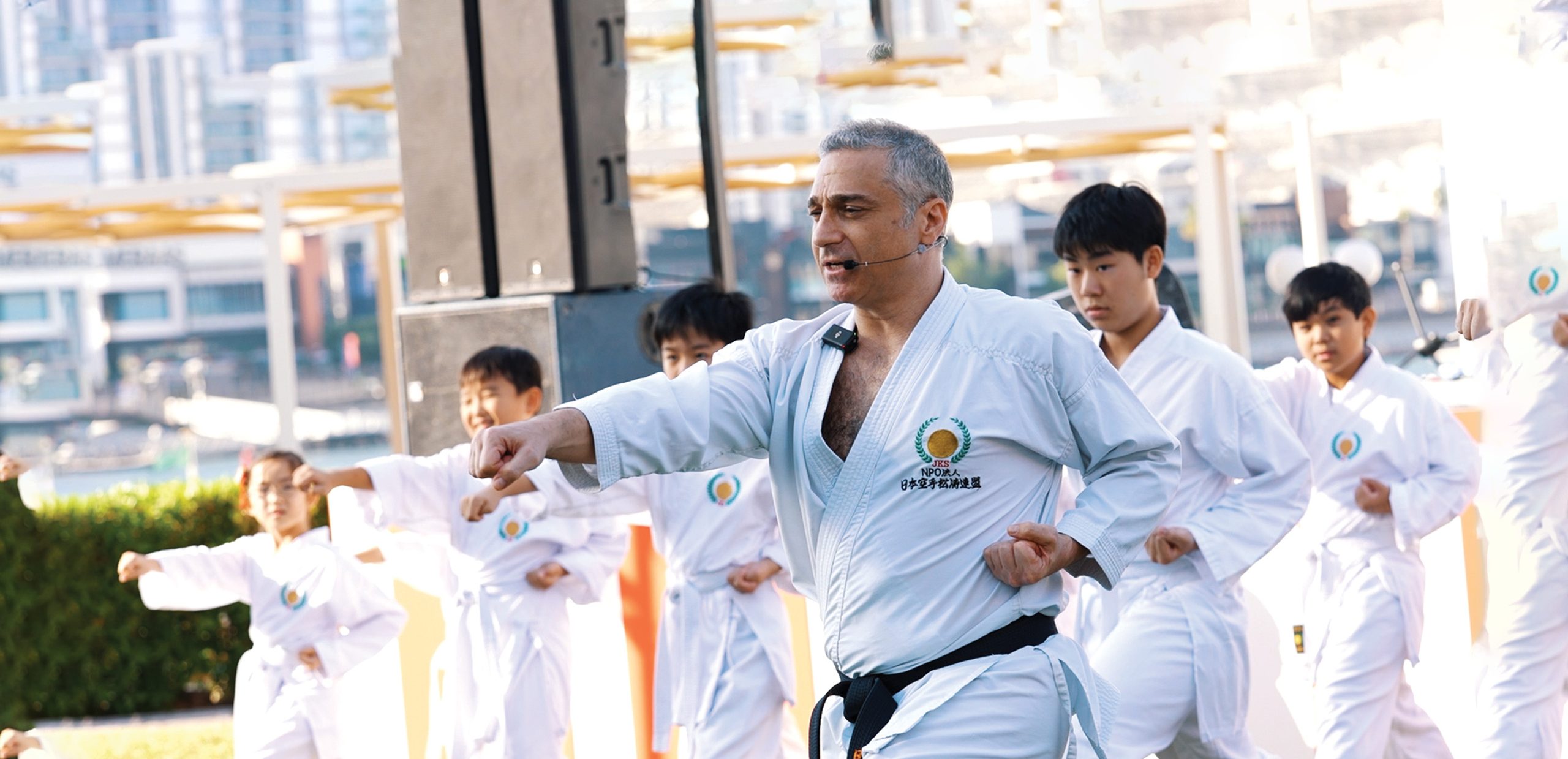
A. I had always been athletic and had encountered martial arts as a child. When I returned to karate training, I initially wanted to become physically fit. But when I entered the dojo, I recognized something far deeper. Karate is Japanese and offers a disciplined, non-violent method of responding to conflict.
You learn both attack and defense, yet the objective is not uncontrolled fighting. We strike with strength while exercising complete control and refraining from harming our training partner. You are learning to master every element of your body. The first time I observed that, I thought, “This is what I want.”
Training soon became my priority. I structured my work as a telecommunications consultant around it until I realized this was what I wanted to dedicate my life to. My teacher explained that if I wanted to become a specialized instructor, I needed to train in Japan.
Q. What did becoming an instructor in Japan require?
A.The Japan Karate Shoto Federation, or JKS, has a highly specialized Instructor Course. You cannot simply arrive and enter it; you must already have reached an advanced level. I compare it to completing a university degree, then a master's, and finally a doctorate. I had trained for about ten years and had already attained a third-degree black belt when I applied.
The course requires physical strength, mental readiness, and humility, because however prepared you believe you are, you are never fully prepared for what it demands. After three years, I became the first—and so far only—non-Japanese graduate of the JKS Instructor Course.
Q How would you describe the values at the heart of your teaching?
A. My journey began in war, with the search for a system of harmony. In karate-do, I found a discipline that teaches us how to meet adversity without losing ourselves. At HSKD Academy, I express that through seven principles: Perseverance, Humility, Agility, Self-Control, Tolerance, Empathy, and Respect. Perseverance means continuing despite difficulty. Humility is recognizing that however much you know, there is always more to learn. Agility is not only speed in the body but sharpness in the mind. Strength is never a license to hurt another person; that is where self-control begins.
Tolerance does not mean accepting everything another person does. It means knowing where and how to draw a boundary while remaining calm through the storm. Empathy begins with understanding that we are not perfect. We make mistakes, and we must learn to forgive ourselves before we can genuinely forgive others. Finally, there is respect, without which we cannot coexist. Human differences will always remain. The question is whether our actions are morally valid and whether the power we exercise causes harm. If rain is falling, you do not try to destroy the rain; you carry an umbrella. You do not need to overpower everything that confronts you. You need to know how to respond without creating greater harm.
Q. Why is it important to introduce children to these principles while they are still young? Could teaching self-control, empathy, and respect at an early age help prevent bullying and contribute to a more peaceful society.
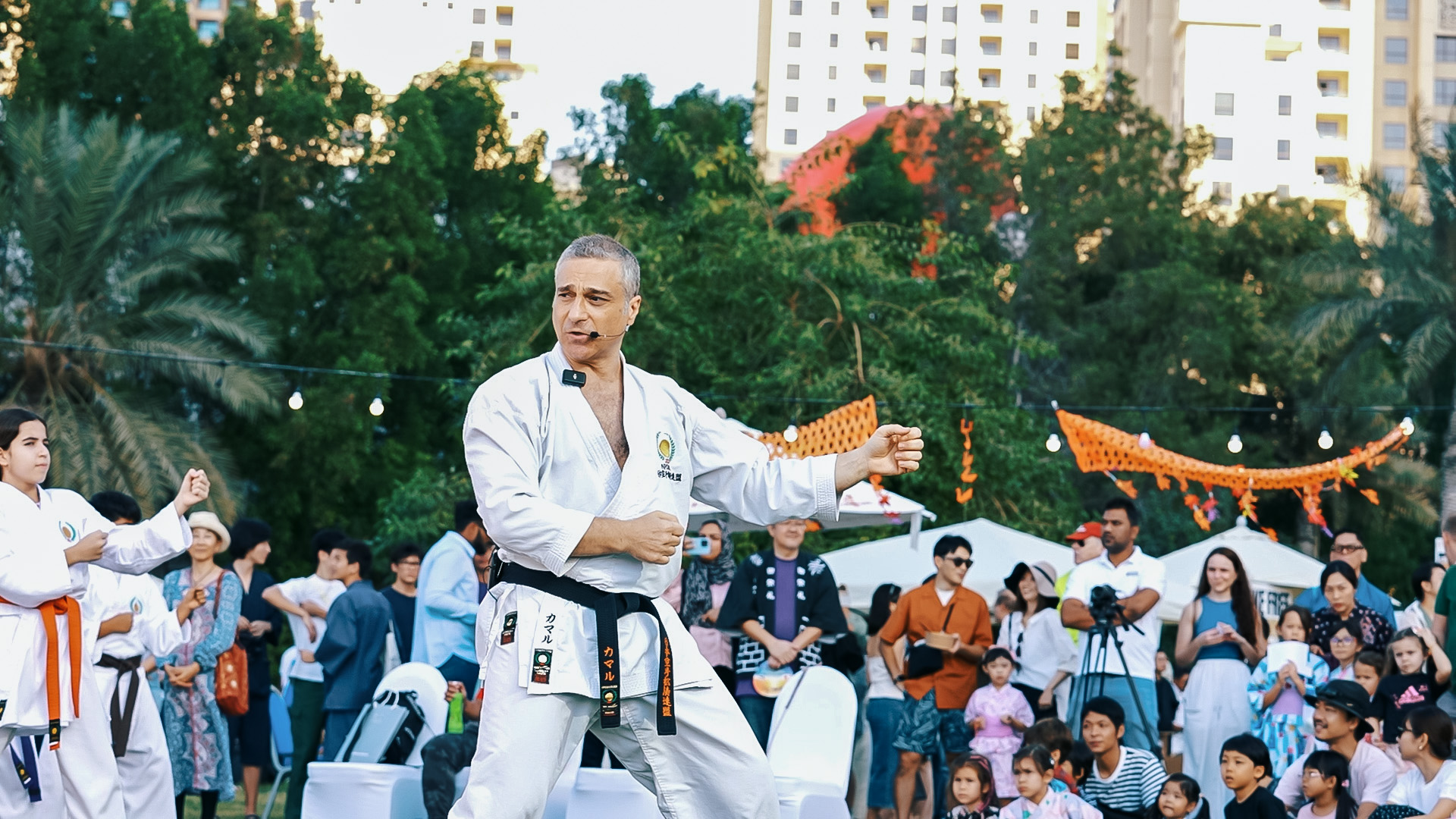
A. Teaching children self-control, empathy, and respect early is crucial because these years shape their lifelong character. Karate-Do helps children understand that real strength comes with responsibility and judgment. Training together builds empathy and respect, teaching kids to value each other and handle conflict peacefully.
Karate-Do empowers both strong and vulnerable children—encouraging restraint in the strong and confidence in the vulnerable. While it can't eliminate bullying on its own, instilling these principles early gives children tools to respond to conflict without violence and helps create a more peaceful society. The process takes time and consistent effort, reinforcing that personal growth is gradual and ongoing.
Q. Can everyone develop these qualities?
A I believe they already exist within us; experience reveals them. Not everyone will understand these ideas in the same way, but that does not mean we must become enemies. The real question is whether someone is willing to do the work required to uncover those qualities. Awareness may begin with an experience that opens your eyes. If I have anger issues, for example, I first have to recognize them. In karate, the journey begins by entering the dojo and training. Repetition makes you confront yourself—your habits, frustration, exhaustion, and ego.
Q. You distinguish between karate and karate-do. What is the difference?
A. Karate means 'empty hand': learning to defend yourself without weapons. The word do means ‘the way' or ‘the path'. When we say karate-do, we are speaking about more than technique; we are describing a way of life.
A way of life requires you to consider consequences. Everything you do affects other people. Karate-do asks you to become conscious of your own actions, of the actions of others, and of the relationship between them. Physical discipline becomes a path to ethical and personal development.
Q. And what is the meaning of Shotokan?
A. Shotokan is associated with Gichin Funakoshi, one of the central figures in the development of modern karate. Funakoshi Sensei—sensei means teacher—wrote poetry under the pen name Shoto. Kan means hall or house, so Shotokan originally referred to Shoto's training hall.
Funakoshi was both an educator and a karate master. He brought karate from Okinawa to mainland Japan and placed morality and conduct at the center of its teaching. That is essential: Shotokan is not merely a collection of physical techniques. Its purpose is the formation of character.
Q. How does karate help us step outside the ego rather than react from it?
A.You do not dominate the ego; you put it aside and observe it. You learn to master your actions so that you do not automatically react as the ego demands. Can you observe an emotion and choose an action that is not egotistical? Yes—but it takes practice and awareness.
Karate teaches through repetition. When you repeat a technique until you reach exhaustion, you willingly cross a barrier. You begin to understand the effort required to build strength and knowledge, and you recognize that same effort in others. That is how empathy develops. Gradually, you become more conscious of how your actions affect people. You can tell the ego to step aside and choose an action that helps rather than harms.
Q. What role does the teacher play in that transformation?
A. The teacher is fundamental. Who is watching, guiding, and correcting you while you train? The right teacher can turn knowledge into a pathway and inspire others to become their best selves.
At HSKD Academy, anyone who teaches must be aligned with this philosophy. An instructor must continually work on themselves, both inside and outside karate, before they can guide another person. Technique alone is not enough; the teacher must embody the values being taught.
Q. What brought you from Japan and Lebanon to Dubai?
A. Karate already existed in Dubai, as it does throughout the world. What I wanted to bring was my life's work and the Japanese standard of teaching I had received. I had established a dojo in Lebanon, and my family had relocated to Japan. Then one of my senior students told me about an academy opening in Dubai that wanted to introduce karate.
I already had instructors supporting the dojo in Lebanon, and two of my brothers lived here, so Dubai felt like a natural place to expand. I came as a professional karate instructor, not as someone teaching it alongside another career. The values we have discussed are not an addition to my work; they are the work.
Q. What is your vision for HSKD Academy in Dubai?
A. My dream is to establish a permanent, fully fledged Japanese dojo and cultural learning center: a place where people can practice Shotokan karate-do throughout the week, but also encounter other traditional Japanese arts.
I imagine karate alongside shakuhachi—the traditional bamboo flute—the tea ceremony, kimono dressing, calligraphy, ikebana, and kintsugi. Shakuhachi, like karate, is connected to mindfulness and breath. Ikebana brings discipline and sensitivity to the arrangement of flowers, while kintsugi repairs broken pottery with gold, transforming damage into part of an object's history.
Each discipline must be taught at the highest level. I would bring highly qualified teachers and practitioners including specialists from Japan rather than compromise the depth and authenticity of these traditions. Dubai, with its international community and openness to different cultures, is the right place to create such a center—a space devoted not simply to Japanese activities, but to the philosophy and way of living behind them.
Q. Is there one idea that captures the purpose of karate for you?
A. Funakoshi Sensei, who played a central role in introducing and establishing Okinawan karate in mainland Japan, said: “The ultimate aim of karate lies not in victory or defeat, but in the perfection of the character of its participants.” We do not train to compete, win, or avoid losing. We train to become better human beings who can positively influence society.
To hurt someone is to take something from them—their safety, dignity or joy. Karate teaches us that real strength is not demonstrated by overpowering another person. It is revealed in awareness, restraint, and the ability to choose a more harmonious response. And perhaps therein lies the true power of karate-do: transforming strength into harmony, one person at a time.
To learn more about Sensei Kyle Kamal Helou, his teaching and classes in Dubai, visit HSKD Academy




Leave a Reply