




For years, wellness in residential development was treated as a list of desirable extras: a gym, a swimming pool, perhaps a spa or a landscaped garden. These additions made a property more attractive, but they rarely influenced the deeper logic of how a community was designed.
That distinction is beginning to matter. As the boundaries between home, work, leisure and health continue to shift, buyers are asking more of the places in which they live. A home is no longer judged only by its dimensions, finishes or address, but by the quality of life it makes possible.
Within the UAE, Arada has been developing its own response to that change. Its corporate purpose, “Connected Life”, begins with the belief that when people and spaces connect, healthier and more meaningful lives can take shape. Across its portfolio, that philosophy appears in different forms: through nature and movement at Masaar, through an interconnected urban ecosystem at Aljada, and through the emerging world of precision wellness at Akala.
The projects are very different in scale and character. Looked at together, however, they reveal an interesting evolution in the relationship between real estate and wellbeing.

When the Environment Encourages a Way of Life
The influence of our surroundings is often subtle. A shaded path makes walking more appealing. A green view changes the feeling of arriving home. A nearby café, school or fitness space can turn an anonymous development into a neighbourhood where daily life unfolds more naturally.
This is where wellbeing moves beyond the language of amenities. It becomes part of the master plan: how people move, meet, rest, exercise and access what they need. The architecture still matters, but so do the spaces between buildings and the habits those spaces encourage.
Arada describes its approach as placing human potential at the centre of the spaces and experiences it creates. Its sustainability framework extends that thinking across three areas—better places, responsible business and social impact—linking the quality of the built environment with longer-term environmental and community value.
The philosophy becomes clearest when seen through three of its most distinctive destinations.
Masaar: Wellbeing Through Nature
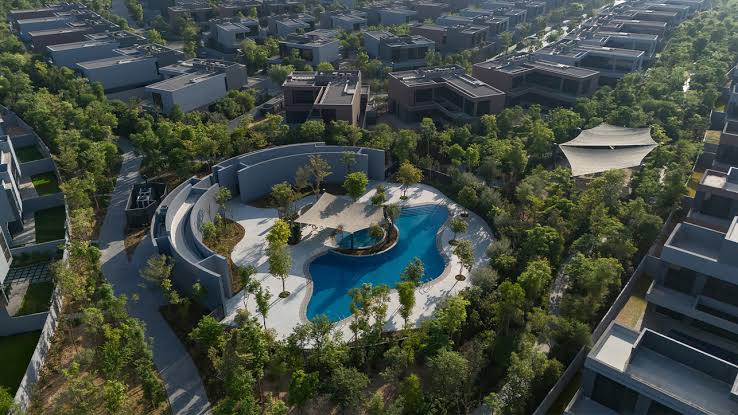
At Masaar in Sharjah, the starting point is the landscape. The 19-million-square-foot residential community has been planned around a green spine containing more than 50,000 trees, connecting its seven gated districts with the central community hub. Villas and townhouses have direct access to green spaces, while 13 kilometres of cycling and jogging trails encourage residents to spend more time outdoors.
There are sports courts, quiet zones and places designed for both activity and pause. Yet the most compelling aspect of Masaar is not any one facility. It is the way the forested setting changes the rhythm of everyday life.
Nature is not positioned at the edge of the development as decoration. It becomes the connective tissue running through it. Walking, running, cycling or simply being outside can form part of an ordinary day rather than an excursion requiring planning and travel.
That has a psychological dimension as well as a physical one. Coming home through trees, having room to walk and encountering neighbours beyond the controlled environment of a lobby can influence how restorative a place feels. In this sense, Masaar’s version of wellness is preventative and intuitive: the surroundings quietly make healthier choices easier.
Aljada: Wellbeing Through Connection
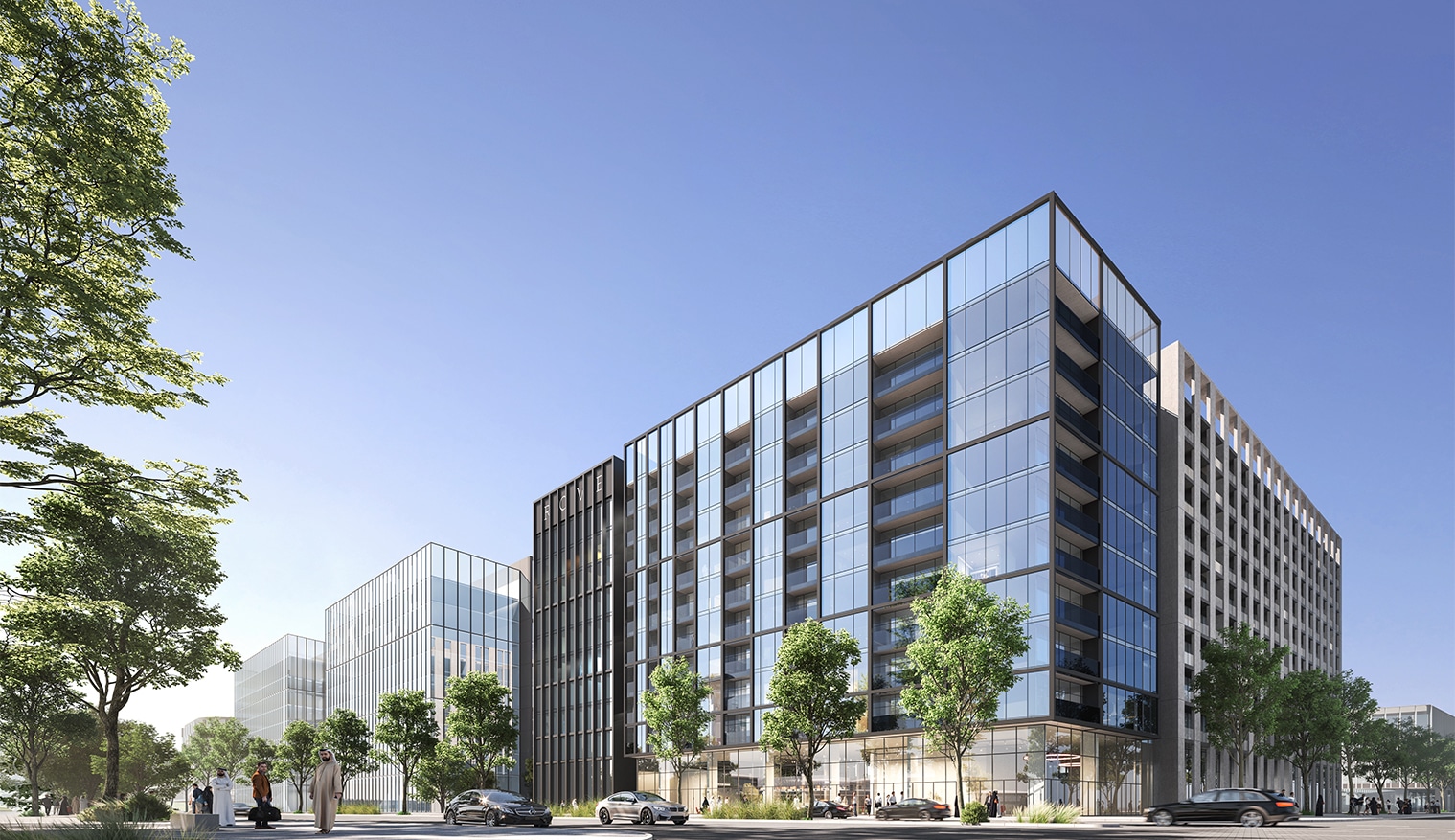
If Masaar finds wellbeing in retreat and nature, Aljada approaches it through the energy of urban life. Described as the new downtown of Sharjah, Aljada spans 24 million square feet and brings homes together with offices, retail, hospitality, education, culture, recreation and 250,000 square metres of green space. Its scale allows it to function less like an isolated residential project and more like a self-contained part of the city.
The lifestyle proposition here is based on proximity. Living, working, exercising, dining, learning and socialising can happen within the same wider community. This does not offer the stillness of a secluded retreat, nor is it intended to. Its appeal lies in reducing the distance between the different parts of daily life.
That matters in cities where time is often lost moving between home, work, schools, appointments and leisure. Convenience alone is not wellbeing, but less friction can create more room for it. When essential services, cultural spaces and opportunities for movement are close at hand, a resident gains something increasingly valuable: time.
Aljada also illustrates the social side of wellness. Parks, cafés, retail streets, entertainment venues and shared facilities create reasons for people to leave their homes and participate in the life around them. The success of such places ultimately depends on how they are used, but the master plan establishes the conditions in which connection can happen.

Akala: When Wellness Becomes the Purpose
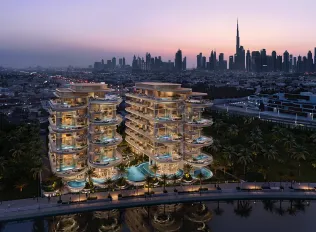
Akala marks a more radical shift. Here, wellness is neither a natural backdrop nor one layer of a mixed-use community. It is the central proposition. Located in Dubai, the twin-tower destination brings together private residences, an ultra-luxury hotel, an elemental spa, an elite fitness facility and medically led wellness services. Arada describes it as the world’s first precision wellness environment—a claim that signals how deliberately the project is positioning itself beyond the conventional idea of a luxury residence with a good spa.
Precision wellness uses personal data, medical insight and scientifically informed interventions to create individual programmes. At Akala, that thinking is intended to extend through the resident or guest experience, from assessments and nutrition to movement, recovery, mindfulness and longevity-focused treatments.
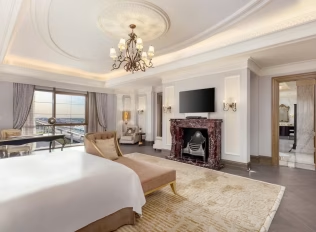
The Everwell clinic is planned as an ultra-private medical wellness environment, while spa and fitness spaces bring together thermal therapies, recovery facilities, high-performance training and restorative practices. The residences themselves are designed to connect architectural craft with personalised technology, making the home part of the wider wellness ecosystem. This integration is what separates Akala conceptually from the familiar luxury formula. A gym in the basement remains an amenity. A home, hotel and clinical environment designed to work together around an individual’s health represents something different: an attempt to embed wellbeing into the entire experience of living.
For its intended audience, privacy and convenience are part of that proposition. Diagnostics, coaching, treatments, recovery and hospitality can be coordinated within one environment, supported by a service philosophy Arada calls “weightlessness”—the removal of practical burdens so that residents and guests can focus on how they want to feel and perform. The promise is ambitious, and its true measure will come through the lived experience once the project is operational. Still, Akala reflects an important direction within high-end real estate. Luxury is increasingly being defined not only by space, rarity and service, but by access to time, privacy, personalisation and the possibility of living well for longer.
Three Interpretations of Wellbeing
Seen individually, Masaar, Aljada and Akala respond to different lifestyles and different ideas of home. Seen together, they trace a clear progression.
Masaar approaches wellbeing through nature and active living. Aljada does so through connection, convenience and the vitality of a mixed urban community. Akala makes wellness the reason for the destination itself, combining the home with hospitality, fitness and personalised health services.
There is no single model that will suit everyone. Some people recover through quiet and greenery; others feel most alive when surrounded by culture, activity and human exchange. For another group, wellbeing is becoming a more intentional and measurable pursuit. The strength of the broader philosophy lies in recognising that the places we inhabit can support these different needs rather than remaining passive containers for daily life.
Arada’s 2025 sustainability reporting adds another dimension to this approach. Across its launched developments, the company reports more than 178,000 trees planted or committed, while nine projects are pursuing certifications including LEED, WELL, SmartScore and WiredScore. Such measurements do not tell the whole story of how a place feels, but they bring accountability to ideas that can otherwise remain abstract.
When Place Shapes the Way we Live
Real estate has always shaped behaviour, even when it did so unintentionally. Long distances encourage driving. Inviting streets encourage walking. Shared spaces may create encounters; poorly considered ones remain empty. Light, greenery, noise, privacy and access to nature all influence the experience of a home long after its finishes cease to feel new. What is changing is the degree of intention. Developers are beginning to think less about adding wellness to a project and more about designing places that actively support it.
Arada’s interpretation is still evolving, from the woodland calm of Masaar to the urban completeness of Aljada and the high-tech personalisation of Akala. What connects them is a belief that a development should do more than provide an address. At its most thoughtful, it can make movement more natural, connection more likely, time easier to protect and home a place that genuinely contributes to how life is lived.
That may be the most meaningful expression of “Connected Life”: not simply bringing buildings, amenities and people together, but considering what becomes possible when they are designed to belong together from the beginning.
Explore the human perspective behind this philosophy in our Conversation with Maria Gallabov, who reflects on the relationship between wellbeing, belonging and the spaces we create






Leave a Reply