




Sometimes, what may start as a simple relocation quickly becomes a web of critical decisions. Imagine a family charting a new course—moving to a new country while their business thrives in Europe and a cherished property sits somewhere else. Who will oversee the business from afar? How can assets be protected and passed on seamlessly across borders? And, most importantly, who brings all these threads together with a global, strategic perspective?
In a world where information is at our fingertips and routine tasks can be handled in minutes, an advisor's true value lies not in billed hours, but in the moments that matter most—the pivotal conversations that illuminate unseen risks or open new possibilities before a crucial decision is made.
Frédéric Cuguen is the person you want in the room when a project spans several countries and several disciplines, and someone needs to bring the advice together. A French lawyer whose career has taken him from the Paris Bar to Geneva and Dubai, he has more than 25 years’ experience in international tax, wealth planning and governance. As founder of CW Partners, he brings that experience to Fidence Group, where he works with families and entrepreneurs whose lives and businesses cross borders. Strategic and practical, he approaches each situation as a whole, in the manner of an architect.
We sat down with Frédéric to explore his insights on navigating the complexities of cross-border life, from unearthing hidden risks to building resilient structures in the UAE and beyond, and to discuss what truly valuable guidance looks like.
These questions open a window into the art and science of creating global legacies, look at what the UAE offers beyond opportunity in a year that has tested the region, and explore how families can build lives and legacies across borders that hold when circumstances change.
With technology accelerating research and automating routine work, hours spent no longer reflect true value. In your view, what qualities or outcomes should clients seek when evaluating the impact of an advisor?
It is one of the questions I think about most at the moment. In an orchestra, only the conductor holds the full score. In our professions, artificial intelligence has now put it on every stand. A first comparison between two jurisdictions used to take days. It now takes minutes, and the client can produce it as easily as the adviser. Time and knowledge are no longer as rare as they were, and we owe it to our clients to say so.
What becomes rare was never written in the score. I call it presence: an adviser who knows you, who questions the question before answering it, and who is still there when the plan has to be carried out. A machine answers what it is asked. It rarely asks whether the question was the right one, and it never signs.
A client can test this without any technical knowledge. Did your question change during the first conversation? When the plan met reality, at the bank or within the family, was your adviser still in the room?
One caution about measuring impact. The most useful advice often leaves no trace: the contract you did not sign, the clause that never had to be invoked. Hours record what was produced. They say nothing about what was avoided.
Your journey began in Paris with tax law, transitioned to private banking in Geneva, and evolved into building a practice in Dubai. Was there a defining moment when you realized that the question a client brought to you was just the tip of the iceberg, and that true value lay in connecting the dots across their entire landscape?
In Paris I learned to read maps, and to draw them: tax codes, treaties, structure charts. I still practice that discipline every day. Geneva then showed me the whole of a family’s balance sheet, where a lawyer only sees the file he is sent. But the journey itself began on the ground, from Istanbul to Almaty, when I saw what happens backstage. The person who signs is not always the person who decides, and institutions do not always behave the way their rulebooks say.
There was no single moment. A pattern repeated itself until I could not ignore it. Clients bring the question they know how to ask. It is usually a tax question, because tax comes with a number. The question that matters stands just behind it: a partner who is no longer aligned, or a child who does not want the business.
I have learned to treat the first question as a symptom. It is real, it deserves an answer, and it is rarely the diagnosis.
Picture a family making the leap to Dubai, maintaining their business and property roots in Europe. What’s the first thing you seek to uncover about their ambitions and circumstances before offering guidance?
I start by listening, and I pay attention to the details people think are irrelevant: where the children go to school, who signs for the company, which house they still call home. Those details are the file.
Then I reverse the conversation. A family that relocates talks about the destination, which is natural. But a flawless relocation is won or lost at the point of departure. The work comes in three stages. First, map every tie with the country they are leaving: home, family, company, assets, mandates. Second, look at the destination twice, once for the landing and once for the regime that applies year after year. Third, set a calendar and keep to it, because the order of the steps matters as much as the steps themselves.
No European country likes to see a taxpayer leave. A family should assume that, some years later, someone will ask them to prove that they really left. That proof is built at the time of departure. It is rarely possible to reconstruct it afterwards.
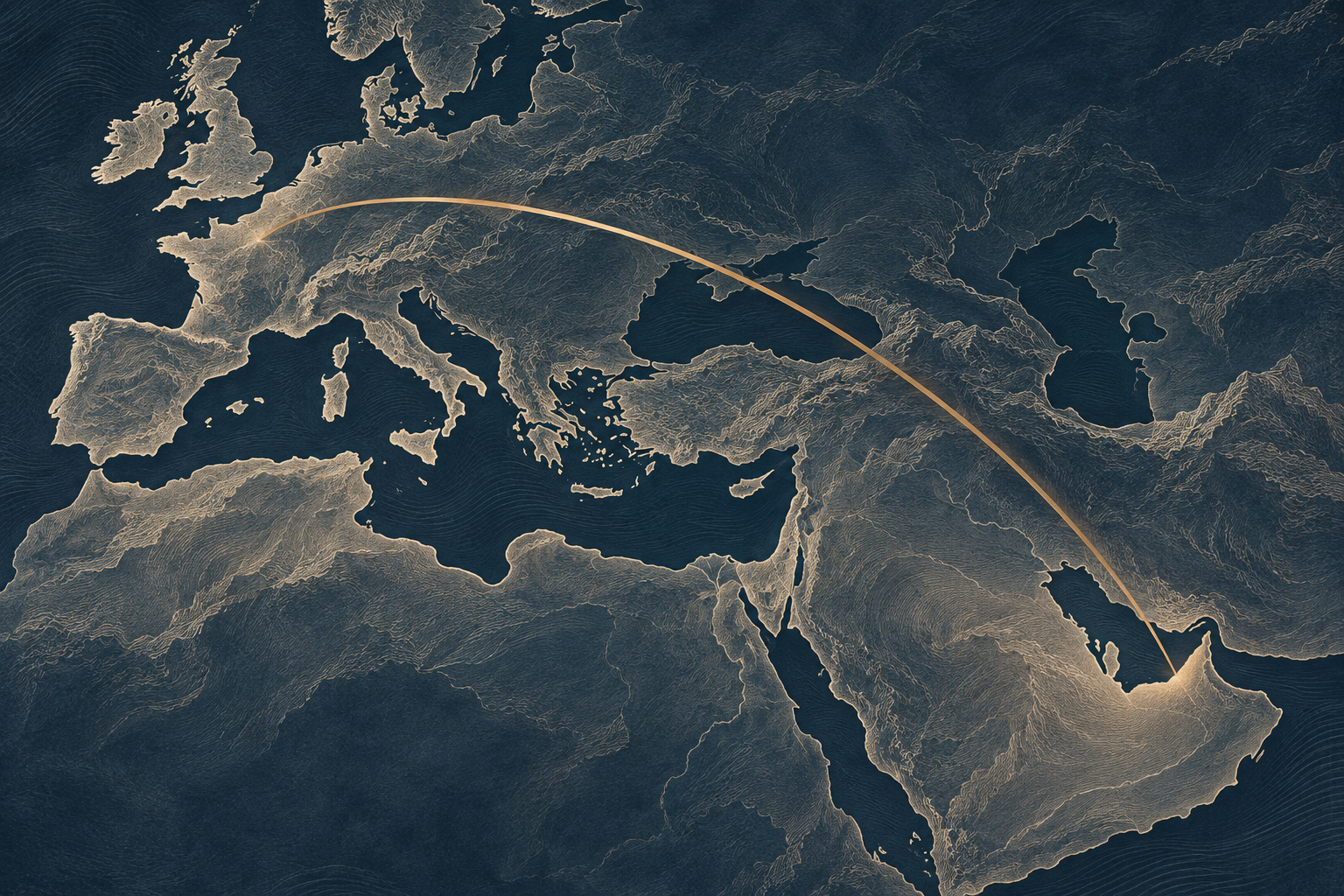
Mapping the full architecture before a single move is made, legal, tax, governance, execution.
Every dimension, in sequence.
In your experience, what are the blind spots these families often miss when navigating such a transition?
The first is to treat the move as a tax project. A relocation succeeds when the center of a family’s life really moves, so the question to settle before any calculation is the purpose: what life do we want, and does everyone at the table want it? It is also the safest approach, because the human test and the legal test turn out to be the same. When two countries claim the same taxpayer, most treaties end up asking where the center of that person’s life is. A move that is real at the dinner table is real in the file.
Others come up again and again. The 183-day rule is the best-known test and rarely a sufficient one: in many European countries, a family home or a center of economic interests counts as much as a number of days. The company is another. A founder who moves and keeps taking every decision may have moved the management of the business with him, with tax consequences in both countries. So are the family documents: a will or a marriage contract drafted for one country does not automatically produce the same effects in another. And almost nobody plans the return. A relocation should be designed with its way back.
Even with a team of trusted advisors—a lawyer, an accountant, a banker—families can find that critical details slip through the cracks. Where do you most often see gaps in collaboration, and what is at stake when those gaps go unnoticed?
Complex projects rarely break at their weakest point. They break in the silences between competent mandates. Each adviser has done what was asked, and the loss sits in the space nobody was asked to look at.
Take a building site. Every trade can be excellent, and the house still fails if nobody coordinates them, or if the architect has never set foot on a site. The same is true of any team: the best individual players do not make the best side.
I see three recurring patterns.
1. No transversal reading. A serious question has seven dimensions at once: legal, tax, financial, governance, political, psychological, and operational. Each adviser is engaged, and paid, to answer on one. A recommendation that clears six and fails the seventh is a failed recommendation, and the failing dimension is rarely the one under examination. What holds in the opinion breaks in the room.
2. The map mistaken for the territory. Most advice describes how a framework is designed to work. Little of it accounts for how people and institutions behave in practice: competing agendas, informal authority, the bank’s real credit committee, the regulator’s actual practice. A strategy built on the map alone is not wrong. It is untested, and that is discovered at the moment of execution, when correction costs the most.
3. No owner after the decision. Advice ends with the opinion, and the work begins after it. Without named owners, dated milestones, and a written record, priorities drift, positions taken orally are never traced, and information gaps harden into governance problems.
What is at stake is simple to state. A sound decision poorly executed is indistinguishable, in the end, from a poor decision.
Can you share an anonymized story where a cross-border structure looked flawless on paper, but you recognized hidden obstacles that could have made it unworkable in real life? What did you spot, and how did your intervention reshape the client’s path?
A recent one, and a typical one. A European industrial group set up a wholly owned subsidiary in Dubai. On paper, everything was right: a premium free zone, real offices, staff on the ground, proper governance. Then it tried to open a bank account.
A bank does not read a structure the way a lawyer does. It has to identify and document who owns and controls its client through every layer and in every country, and the group’s chart, although perfectly legitimate, had several of each. The company existed. Without an account, it was a certificate on a wall.
The solution was to change the sequence. A new company was set up, held directly by the group’s top executive: one person the bank could meet and one layer to document. Once the account was open, the shares were transferred to the group and the existing contracts were assigned to the new company.
This is why I design UAE structures from the bank account backwards. What a tax adviser would draw first is rarely what a compliance officer can approve first.
In the age of instant information, when does seasoned judgment become irreplaceable, and can you share a moment when your experience made all the difference for a client?
Judgment becomes irreplaceable when it has to defend a cost that looks unnecessary.
An entrepreneur (of the “old school”) needed a holding company in the UAE for his group. I told him it required real substance: premises, people and decisions taken on the spot. He found the bill excessive, and on the information available, he had a point. Any search would have told him that a company can be registered here in a few days, for a fraction of the price.
Sometime later, a subsidiary in Central Asia paid a dividend to the holding. The tax treaty with the UAE applied, and what he significantly saved on that one distribution made him completely forget what he thought he had overpaid. It applied because the holding could show that it was really resident and really managed where it claimed to be.
Instant information gives you the treaty rate. It does not tell you whether you will be entitled to it on the day you need it. Much of what we call judgment is anticipation: knowing which question a tax authority or a bank will ask in three years, and making sure the answer already exists.
Before someone moves abroad, sells a business, or plans a generational handover, what are the three most essential questions they should bring to their very first meeting with an adviser?
Everything starts with a dialogue, so the first issue is whether you are having it with the right person. This is one of the few professions in which age is an asset. Experience is largely the memory of how things went wrong.
I would bring three questions that test the adviser more than the project.
“What have I not asked you?” An adviser with nothing to add to your question is answering it, which is different from advising you.
“Where have you seen this fail?” Those who have done it before answer with a case. The others answer with a principle.
“Who will be in charge once the decision is taken?” If the answer is nobody, or everybody, you have found the first weakness of the project.
And keep one question for yourself before the meeting: what should this make possible in ten years? Most people can describe what they want to avoid. Far fewer can say what they are trying to build.
When families are mapping out where to build their lives and anchor their businesses for the next chapter, what makes the UAE stand out as a compelling long-term base? And on a personal note, what drew you to make Dubai your own home?
Before COVID, it was a global observation more than a calculation. International rules were moving towards transparency, substance, and minimum taxation, and I believed this country would choose to move with them. Covid then showed me something I had underestimated: its ability to adapt and to carry out what it announces. The UAE has been my base ever since.
That is also my answer for families. A long-term base should not be chosen on today’s tax rate, because rates change. The UAE itself introduced a federal corporate tax in 2023. It should be chosen on a country’s capacity to decide and to execute. Here, the distance between what is announced and what is done is short.
Two things should be said plainly. Every base carries a risk. In some countries it is fiscal or political. In the Gulf it is geopolitical, and 2026 has made that concrete. And a base is a ten-year decision, which should not be taken or reversed on the news of a month.
Nor is it an exclusive choice. The families I see doing best combine jurisdictions, each for what it does well. The jurisdiction follows the family and the assets, never the other way round.
You’ve described the UAE as “antifragile”- thriving under pressure. Can you recall a time of true challenge when you saw the country emerge not just resilient, but stronger and more dynamic? And what should a family take from it for its own structures?
Everyone quotes The Black Swan. Fewer have read the book Taleb published five years later, Antifragile, which I find more useful. His distinction is simple. Fragile things break under stress and resilient ones withstand it. The antifragile comes out better than it went in.
I have seen this country pass that test twice. Covid was a live stress test: the free zones digitalized incorporation and administration, and they have worked that way ever since. Then came the FATF grey list in March 2022. The country was off it in February 2024, less than two years later, and the European Union followed in 2025. Banks and registries became more demanding along the way, which is exactly why an account opened here today is worth more than it was.
The regional conflict of 2026 is a test of another order, and it is not behind us yet. It would be dishonest to present it otherwise, and I will not predict how it ends. What I can say is that the reflex was the same as before: support measures for businesses were in place within weeks. The IMF, at the close of its annual review in November 2026, described an economy that had shown resilience, and it forecast a strong recovery in 2027. Whether the country comes out stronger can only be judged afterwards. Antifragile is a verdict, not a promise.
For a family, the lesson does not depend on the outcome. A structure built for a single scenario is fragile by design: one bank, one jurisdiction, one person who knows everything. A second banking relationship, or powers that still work if the founder cannot travel: such options cost little each year, and they are worth everything on the day they are needed.
Which life events should prompt a review: relocation, a business sale, a property purchase, or generational succession? And which quieter events do families tend to overlook?
The four you mention are the visible ones, and in most cases the family chose them. I would add every turning point in a life, planned or not.
The events that do the most damage are the quiet ones, because nobody thinks of calling an adviser. A daughter settles in London or New York, and the family holding can acquire a tax dimension nobody signed for. A founder remarries. Some families spent unplanned weeks or months back in their former country in 2026, and have not yet asked what that stay counts for. And sometimes nothing happens to the family at all: the law changes in a country it thought it had left behind.
A structure is a photograph of a family on the day it was signed. The family goes on living. So I suggest a review at each of these events, and every two or three years even when nothing seems to have happened.
As more families build lives across borders, how do you see their need for advice changing over the next ten or twenty years?
I expect more families will need advice before they move, because members of the same family often move at different times. Take a recent example: an entrepreneur planning to move from Portugal to Dubai. His wife and 19-year-old daughter (a student in Portugal) will keep close ties to the country he is leaving. One of the first questions I have asked him is “Once you have moved, what will an ordinary month look like for the three of you?” His answer helps us understand where the family will spend time together and how often he expects to travel back. With that picture, I have interacted with his adviser in Portugal to look at what the move means for his Portuguese tax residence and help him choose a timetable that actually works for his family.
Across this conversation, one thread keeps returning: an adviser's value rarely sits in the first answer. It sits in the question behind it, and in staying on once the plan meets the bank, the regulator and the family dinner table. Technology will keep making information faster and cheaper, but it cannot supply presence, judgment formed by seeing structures fail, or someone who owns the outcome after the decision is taken. For families whose lives and assets span several countries, Frédéric's counsel is consistent: design for more than one scenario, plan the way back before the way out, and revisit every structure as life moves on. A structure is only a photograph of the day it was signed, and the families who fare best are those with an adviser who keeps the picture current.
For speaking engagements with Frédéric Cuguen, please fill in the inquiry form.




Leave a Reply